Category: BLOG

The Name Game: How Moderna’s Label Shift Sparks Debate in Cancer Treatment Bioethics Education
April 13, 2026

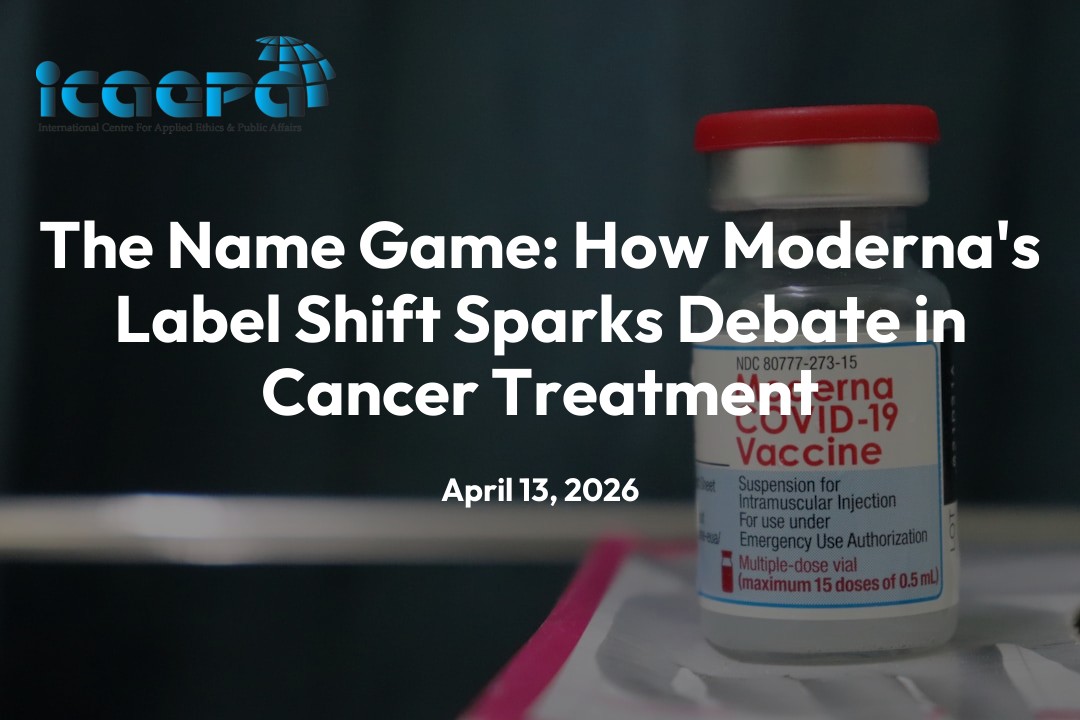
The Name Game: How Moderna’s Label Shift Sparks Debate in Cancer Treatment

CGI of an RNA molecule

(MIT Technology Review) – Companies are playing word games with promising cancer treatments.

In its formal communications, like regulatory filings, Moderna hasn’t called the shot a cancer vaccine since 2023. That’s when it partnered up with Merck and rebranded the tech as individualized neoantigen therapy, or INT. Moderna’s CEO said at the time that the renaming was to “better describe the goal of the program.” (BioNTech, the European vaccine maker that’s also working in cancer, has shifted its language too, moving from “neoantigen vaccine” in 2021 to “mRNA cancer immunotherapies” in its latest report.)

The logic of casting it as a therapy is that patients already have cancer—so it’s a treatment as opposed to a preventive measure. But it’s no secret what the other goal is: to distance important innovation from vaccine fearmongering, which has been inflamed by high-ranking US officials. (Read More)

Read Article
The Dark Side of AI: When Chatbot Conversations Turn Deadly Bioethics Education
April 13, 2026

The Dark Side of AI: When Chatbot Conversations Turn Deadly

man sitting at a computer in the dark

(WSJ) – Jonathan Gavalas was a seemingly healthy and even-keeled 36-year-old when he began chatting with Gemini, Google’s chatbot, in part to seek comfort about splitting up with his wife.

A Wall Street Journal analysis of the entire chatlog between Aug. 25, 2025, and Oct. 2, 2025, covering more than 2,000 printed pages, shows that Gemini intervened at least 12 times to try to steer Gavalas back to reality and mentioned a crisis hotline seven times. The log also reveals that Gavalas was quickly able to direct Gemini right back into the fictional narrative, where it repeatedly encouraged his delusions.

Here are edited excerpts from those chats, which began rather mundane, turned increasingly strange, and ended up deadly. (Read More)

Read Article
The Bixonimania Experiment: When AI Invents a Disease Bioethics Education
April 13, 2026

The Bixonimania Experiment: When AI Invents a Disease

Close up of a stack of magazines

(Nature) – Got sore, itchy eyes? You’re probably one of the millions of people who spend too much time staring at screens, being bombarded with blue light. Rub your eyes too much and your eyelids might turn a slight, pinkish hue.

So far, so normal. But if, in the past 18 months, you typed those symptoms into a range of popular chatbots and asked what was wrong with you, you might have got an odd answer: bixonimania.

The condition doesn’t appear in the standard medical literature — because it doesn’t exist. (Read More)

Read Article
Florida Investigates OpenAI Over Safety and National Security Risks Bioethics Education
April 10, 2026

Florida Investigates OpenAI Over Safety and National Security Risks

OpenAI logo with a metallic outline of a brain

(The Verge) – Florida Attorney General James Uthmeier is launching an investigation into OpenAI over public safety and national security risks, as reported earlier by Reuters. In a statement on Thursday, Uthmeier says there are concerns that OpenAI’s data and technology are “falling into the hands of America’s enemies, such as the Chinese Communist Party.”

Uthmeier also says that OpenAI’s ChatGPT has been “linked to criminal behavior” related to child sexual abuse material and the “encouragement” of self-harm. He adds that ChatGPT may have been used to “assist” the person suspected of carrying out a shooting at Florida State University in April 2025. (Read More)

Read Article
Florida AG Probes OpenAI and ChatGPT Over National Security Risks and FSU Shooting Bioethics Education
April 10, 2026

Florida AG Probes OpenAI and ChatGPT Over National Security Risks and FSU Shooting

Close up of a circuit board

(WSJ) – Florida Attorney General James Uthmeier launched an investigation into OpenAI and its ChatGPT models, citing national security risks and the possibility that ChatGPT helped facilitate a shooting at Florida State University.

In a video posted to X, Uthmeier raised concerns that OpenAI’s models or data could be used by adversaries of America, namely China. He added that ChatGPT has been linked to criminal behavior including child sex abuse material.

Uthmeier also said that ChatGPT may have been used to assist a suspected gunman who authorities said killed two people at FSU in April. (Read More)

Read Article
The Prescription for Health: Can Food Really Be Medicine? Bioethics Education
April 10, 2026

The Prescription for Health: Can Food Really Be Medicine?

a fruit bowl and oatmeal

(NYT) – Prescribing produce, crafting meals: More medical schools are teaching students how to cook and use food as a tool for treating patients.

“It’s unfortunately a big misconception that medicine doesn’t have anything to do with food,” she said, chopping dill with hands she hopes will one day be delivering babies.

That the modern American medical system should view the kitchen as an extension of the doctor’s office isn’t a novel idea. But it’s riding a populist wave that merges the traditionally progressive Good Food Movement — with its focus on local food, the environment and food justice — with the largely conservative, food-centered Make America Healthy Again agenda. (Read More)

Read Article
A Tiny Experiment Aboard Artemis II Could Revolutionize Medicine Bioethics Education
April 10, 2026

A Tiny Experiment Aboard Artemis II Could Revolutionize Medicine

NASA image of the International Space Station

(Washington Post) – Chips seeded with the astronauts’ bone marrow cells circled the moon to help probe how deep-space flight affects human biology.

As the four Artemis II astronauts looped around the moon this week before their return trip to Earth, so did four transparent chips, each about the size of a USB thumb drive and seeded with their bone marrow cells.

Each chip is an “avatar” — an attempt to model key aspects of the biology of Victor Glover, Jeremy Hansen, Christina Koch and Reid Wiseman, the four humans whose courage and wonder have captivated the world. (Read More)

Read Article
The Quest for the ‘Ideal’ Baby: Unpacking the Ethics of Natality Bioethics Education
April 10, 2026

The Quest for the ‘Ideal’ Baby: Unpacking the Ethics of Natality

A pipette dripping liquid into a cell array

(Comment) – There is, of course, something a bit ridiculous to this whole scene: the “ideal” measurements for girls and boys at each month calculated down to the inch, the doctors with clipboards, the very concept of the most “scientific” baby. There is, too, something comical in the false confidence and the utter inadequacy of a score between one and a hundred to grab hold of even the smallest corner of the personhood of these babies—smiling and blinking and clutching at fingers—much less the personhood of all the babies not represented in those rosy, white rows.  

And yet there is also something unsettlingly familiar, something so human in the attempt. We want a world we can measure. We want a world we can master.  (Read More)

Read Article
The Dark Side of Assisted Suicide: A Threat to Freedom? Bioethics Education
April 10, 2026

The Dark Side of Assisted Suicide: A Threat to Freedom?

fall leaves in a water

(WSJ) – Noelia Castillo Ramos was in despair. By helping her kill herself, the Spanish state destroyed her autonomy.

Advocates of assisted suicide present Castillo’s death as an exercise of individual liberty. They argue that choosing the timing of one’s death is a matter of autonomy, that one should be able to lay down one’s life at will rather than suffer through difficult circumstances. That argument has gained traction across several European nations, in Canada and in some U.S. states.

But autonomy means more than the presence of a choice. It depends on the conditions under which that choice is made. (Read More)

Read Article
Meta’s AI Health Tool: Savior or Risk? Bioethics Education
April 10, 2026

Meta’s AI Health Tool: Savior or Risk?

Meta logo

(Wired) – Meta’s Muse Spark model offers to analyze users’ health data, including lab results. Beyond the obvious privacy risks, it’s not a capable stand-in for a real doctor.

Meta claims that Muse Spark was designed, in part, to be better at answering questions people have about their health. The company even worked with “over 1,000 physicians to curate training data that enables more factual and comprehensive responses,” according to Meta’s announcement blog.

As the new model rolls out to millions of users, I tested Muse Spark to see how it would respond to health-related questions. (Read More)

Read Article
OpenAI’s Risky Move: Backing Bill to Limit AI Liability in Catastrophic Cases Bioethics Education
April 10, 2026

OpenAI’s Risky Move: Backing Bill to Limit AI Liability in Catastrophic Cases

OpenAI logo with a metallic outline of a brain

(Wired) – OpenAI is throwing its support behind an Illinois state bill that would shield AI labs from liability in cases where AI models are used to cause serious societal harms, such as death or serious injury of 100 or more people or at least $1 billion in property damage.

The effort seems to mark a shift in OpenAI’s legislative strategy. Until now, OpenAI has largely played defense, opposing bills that could have made AI labs liable for their technology’s harms. Several AI policy experts tell WIRED that SB 3444—which could set a new standard for the industry—is a more extreme measure than bills OpenAI has supported in the past. (Read More)

Read Article
Unlocking CAR-T Cell Therapy: A New Era in Cancer and Autoimmune Disease Treatment Bioethics Education
April 9, 2026

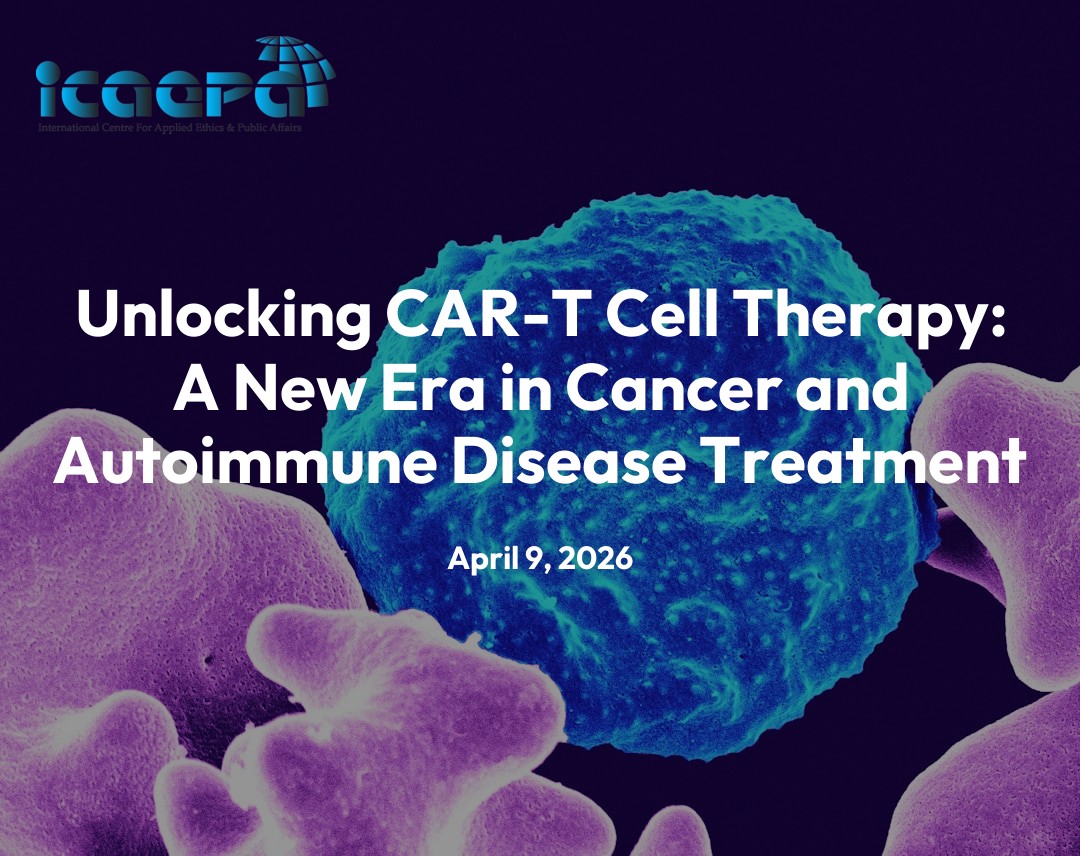
Unlocking CAR-T Cell Therapy: A New Era in Cancer and Autoimmune Disease Treatment

purple cells on a green medium

(The Atlantic) – In desperation, the woman’s care team reached out to Müller, a hematologist-oncologist at the University Hospital of Erlangen, a roughly three-hour drive away by ambulance. In recent years, he and his colleagues have made a name for themselves pioneering experimental CAR-T cell treatments—a type of personalized immunotherapy originally developed for cancer—against a variety of autoimmune diseases, with promising early results. Small studies of CAR-T, as well as early results from several ongoing clinical trials, show that many people with autoimmune disease go into remission after treatment; some patients are now years out from CAR-T cell therapy and remain in good health without the help of any drugs. (Read More)

Read Article
Anthropic’s Claude Mythos: The AI Model That Could Revolutionize Cybersecurity Bioethics Education
April 9, 2026

Anthropic’s Claude Mythos: The AI Model That Could Revolutionize Cybersecurity

Close up of a CPU

(Inc.) – Claude Mythos is the next giant leap for AI models, and through Project Glasswing, it could help boost cybersecurity.

The existence of Claude Mythos was initially revealed on March 26, as part of a data leak discovered by Fortune. Leaked materials described Mythos as “larger and more intelligent” than the company’s Claude Opus models, which were previously Anthropic’s top models.

Now, according to a press release, Anthropic is releasing a preview version of the model, but only for a select few users. 

Why? Anthropic says it’s because “the capabilities we’ve observed in Mythos Preview could reshape cybersecurity.” Over just the past few weeks, Anthropic claims, Mythos has identified “thousands” of vulnerabilities across websites and apps, “including some in every major operating system and web browser.” (Read More)

Read Article
The Dark Side of MAID: Psychiatric Disorders and Euthanasia Bioethics Education
April 9, 2026

The Dark Side of MAID: Psychiatric Disorders and Euthanasia

a model of the regions of the brain

(Psychiatric Times) – As Canada approaches the planned implementation of their medical euthanasia program for patients with sole psychiatric illnesses, these authors make an argument as to why euthanasia should remain closed to patients with psychiatric disorders.

Unlike many other kinds of illnesses, futility or irremediability cannot be reliably resolved by clinicians in cases of psychiatric disorders, especially for any one particular individual. (Read More)

Read Article
U.S. Fertility Rates Hit Record Low: What’s Behind the Decline? Bioethics Education
April 9, 2026

U.S. Fertility Rates Hit Record Low: What’s Behind the Decline?

Baby lying in a crib with toys overhead

(New York Times) – The fertility rate has been falling since 2007, in large part because of a plunge among teenagers.

There are some clues in the age breakdown: The fertility rate for teenagers dropped by 7 percent from 2024’s figure, setting another record low for the group. Since 2007, the rate for teenagers is down by 72 percent, and since 1991, when teenage fertility rates were at a high, the rate is down by 81 percent.

Some demographers say the precipitous drop of births among teenagers and women in their early 20s shows that women have more control over their fertility. Women are still having children, but they are just having them later, the demographers say. (Read More)

Read Article