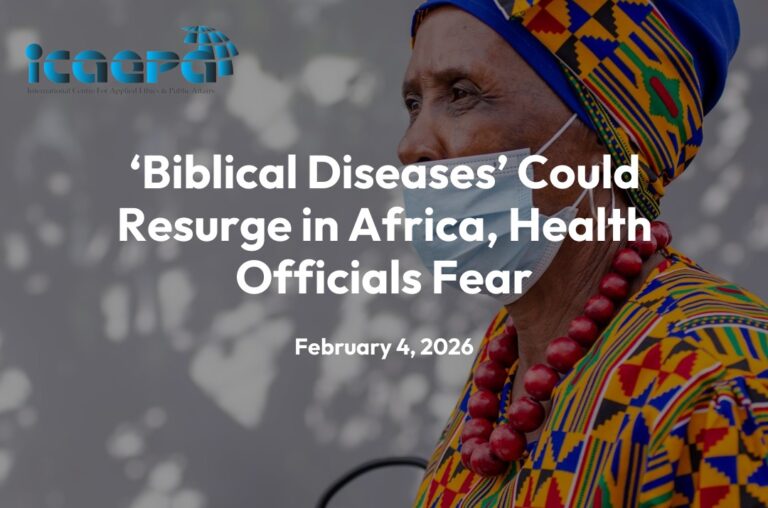
(New York Times) – Onchocerciasis is one of 21 afflictions, most of them treatable and preventable, that the World Health Organization classifies as neglected tropical diseases. Together, they affect more than a billion people, but because many are among the poorest people in the least developed places, these diseases have historically received little funding, research or attention.
While they are rarely fatal, these diseases exact a huge toll in human suffering, including pain, disfigurement and disabilities such as blindness. They are sometimes called “biblical” because they have plagued humans for so long that they are mentioned in ancient texts.
The United States was a major funder of a 20-year effort to finally wipe them out. That money vanished a year ago when the Trump administration dismantled much of U.S. foreign assistance. (Read More)

(New York Times) – In a legal first, a jury in New York awarded $2 million to a patient who said that doctors had deviated from accepted medical standards.
In the first malpractice verdict against providers of gender-affirming care for minors, a jury in New York State has awarded a woman $2 million in damages for a double mastectomy she received as a teenager that she said had left her disfigured.
The plaintiff, Fox Varian, 22, of Yorktown Heights, had accused her psychologist and the plastic surgeon who performed the operation of failing to obtain adequate consent about the risks before she agreed to undergo the procedure in 2019.
She also claimed that the providers had deviated from standard practices governing gender-related medical care. (Read More)

(Reuters via MSN) – A hospital in Barcelona said on Monday it had performed a pioneering facial transplant in which the donor, in a world first, had offered her face for donation before undergoing an assisted dying procedure.
The complex surgery involved transplanting composite tissue from the central part of the face and required the participation of around 100 professionals, including psychiatrists and immunologists, the prestigious Vall d’Hebron hospital said in a statement. (Read More)

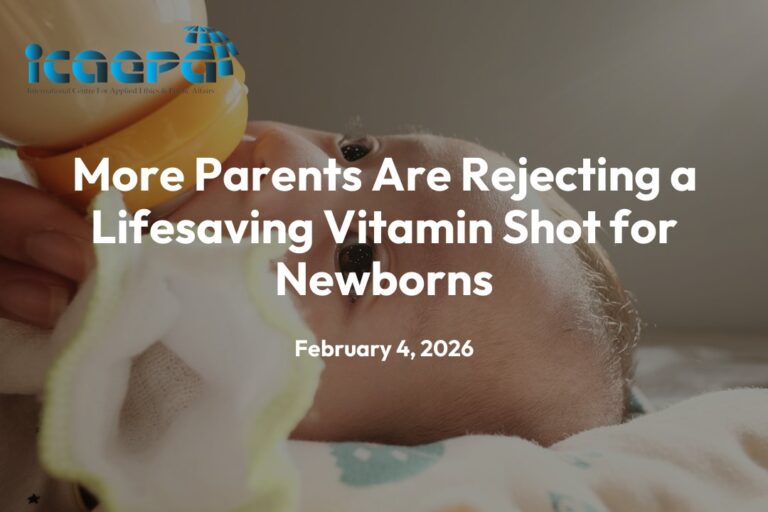
(New York Times) – For decades, hospitals have given babies a vitamin K injection to protect against bleeding. Now, the shot appears to be facing resistance.
Vitamin K plays a crucial role in blood clotting but doesn’t pass to the baby through the placenta effectively, and there isn’t much of it in breast milk. Infants are deficient in it until they can eat solid foods. This can lead to bleeding, from minor oozing from the umbilical cord to potentially life-threatening gastrointestinal or brain hemorrhages.
One injection immediately after birth is very effective at fixing the deficiency, and it has been routinely administered in the United States for more than 60 years.
Now, the shot appears to have been swept up in broader anti-vaccine sentiment, even though it isn’t a vaccine. (Read More)

(WSJ) – There is a looming crisis in America’s death industry. Green-Wood Cemetery might have found a lifeline.
The storied 478-acre Brooklyn burial ground, like many across the U.S., is running out of room for new occupants. With the help of a German entrepreneur, cemetery officials believe they can profitably augment the property by turning loved ones into gardening soil.
The process, called natural organic reduction, uses the body’s own bacteria to transform human tissue. The dead are placed in a sealed vessel bedded with clover, hay and straw and equipped to regulate airflow, temperature and moisture. Then nature takes its course. Microbes break down everything but bones, which are ground into the final compost mix. (Read More)

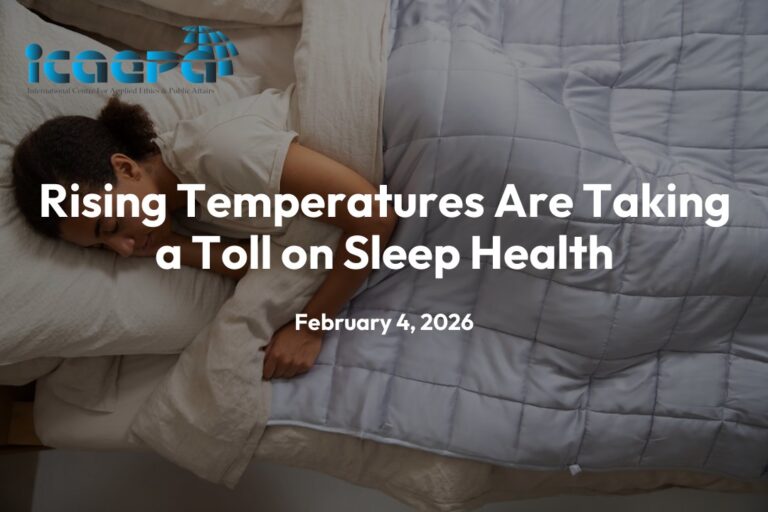
(Wired) – As nights get hotter around the globe due to climate change, the prevalence of sleep apnea is expected to increase by as much as threefold.
One particularly eye-opening study, carried out by giving under-mattress sleep sensors to 67,558 people across 17 European countries and recording their sleep data over the course of five summers, found that the prevalence of sleep apnea events increased by 13 percent at the peak of a heatwave. It also revealed that for every 1 degree Celsius increase in the nighttime temperature, the rates of sleep apnea events rose by 1.1 percent, with the risk being even greater during especially humid nights. (Read More)

(New York Times) – Researchers believe increasing use of cannabis may be contributing to a rise in new cases of schizophrenia and related disorders at younger ages.
A new analysis of birth cohorts in the Canadian province of Ontario has found a striking rise in the incidence of psychotic disorders among young people, a finding that its authors said could reflect teens’ increasing use of substances like cannabis, stimulants and hallucinogens.
The study, published on Monday in The Canadian Medical Association Journal, found that the rate of new diagnoses of psychotic disorders among people ages 14 to 20 increased by 60 percent between 1997 and 2023, while new diagnoses at older ages plateaued or declined. (Read More)

(WSJ) – Fearing rising utility costs, job losses and privacy violations, residents have blocked or delayed data-center projects around the country
Fearing rising utility costs, job losses and privacy violations, locals blocked or delayed about 20 projects around the country representing nearly $100 billion in combined investment in the second quarter of last year, according to Data Center Watch, a research firm tracking the fights.
Many of them belong to tech giants including Meta and Amazon[dot]com, fueling battles from Indiana to Oklahoma. (Read More)

(New York Times) – You’ve probably heard of extreme cases in which people treat bots as lovers, therapists or friends. But many more have them intervene in their social lives in subtler ways. On dating apps, people are leaning on A.I. to help them seem more educated or confident; one app, Hinge, reports that many younger users “vibe check” messages with A.I. before sending them. (Young men, especially, lean on it to help them initiate conversations.)
In the classroom, the domain I know best, some students are using the tools not just to reduce effort on homework but also to avoid the stress of an unscripted conversation with a professor — the possibility of making a mistake, drawing a blank or looking dumb — even when their interactions are not graded. (Read More)

(New York Times) – Every few months, he acts out more than usual and he is hospitalized. Doctors administer enough medication to briefly calm him, then label him “stable” and “not a harm to self or others” and discharge him back to the streets, where he is exposed to harsh winter nights without any support — sometimes even without shoes or a jacket.
This is not anonymous urban homelessness. It is local and relational, playing out in full view of his childhood friends, former teachers and soccer coaches. They don’t know how to help him any more than we do. (Read More)

(New York Times) – Obamacare’s open enrollment period is over, and Americans around the country are facing higher health insurance costs. But the increases have been particularly steep for one group of people.
People who earn $62,600 or less — the people whose incomes fall on the left side of this chart — get income-based subsidies to pay most of the bill.
People who earn more than $62,600 — the people on the right side — get no subsidies at all. They pay full price.
That means an increase of $1 in income for the average 60-year-old — from $62,600 to $62,601 — could mean paying $10,000 more for health insurance. (Read More)

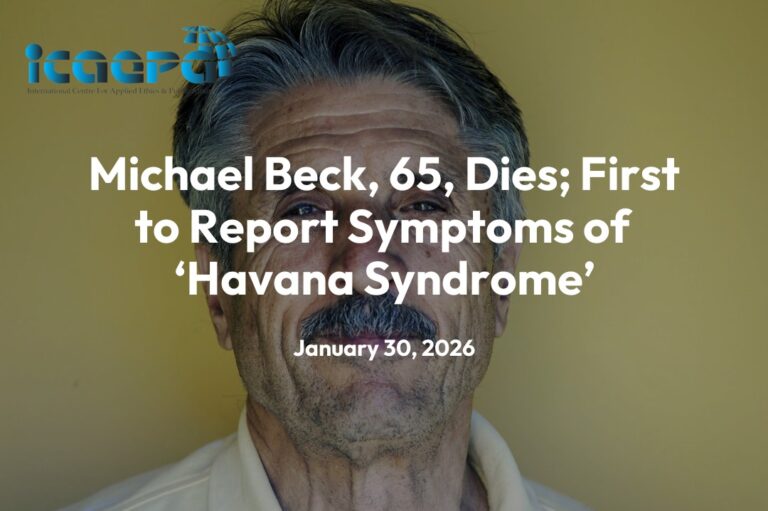
(New York Times) – As an employee with the N.S.A., he claimed he was exposed to a direct-energy device that led to a diagnosis of Parkinson’s disease at age 45.
Michael Beck, the first of scores of federal workers to develop neurological symptoms while serving at U.S. government facilities overseas, a condition that has come to be known as Havana Syndrome and which, Mr. Beck claimed, resulted in his diagnosis of a rare form of Parkinson’s disease when he was 45, died on Saturday in Columbia, Md. He was 65.
His daughter, Regan, said that he died while shopping and that the cause had not been determined. (Read More)

(Reuters via MSN) – The Trump administration has told global vaccine group Gavi to phase out shots containing the preservative thimerosal as a condition of providing the group with funding, a U.S. official and a Gavi spokesperson told Reuters.
The request, which Reuters is the first to report, is the latest sign of efforts by the administration of President Donald Trump to influence health policy globally. (Read More)

(NBC News) – A person’s genes play a far greater role in likely lifespan than previously thought, according to a major new study published Thursday in the journal Science.
Using data from human twin studies, an international team of researchers arrived at the conclusion that the genetic contribution to how long we’re likely to live is as high as 55%.
This new finding is strikingly higher than previous estimates, which have calculated the role of genetics in lifespan could range from 6% to 33%. (Read More)