
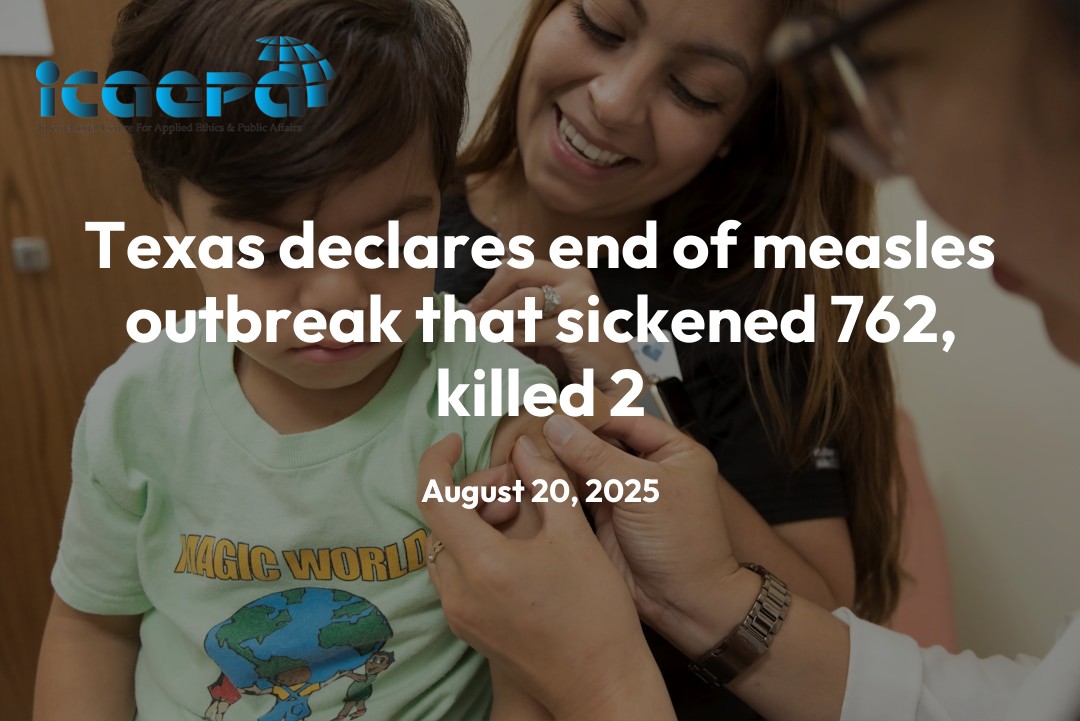
The Ethical Implications of the Texas Measles Outbreak and Its Resolution
This analysis is based on an article originally published by bioethics.com.
The recent declaration by Texas health officials regarding the end of the measles outbreak, which resulted in over 750 infections and the tragic deaths of two unvaccinated school-aged children, raises significant ethical and policy-related questions. While the cessation of active transmission is welcome news, it is crucial to examine the underlying factors that contributed to this public health crisis and the implications for future disease prevention strategies.
Context of the Outbreak
The Texas Department of State Health Services confirmed that it has been over 42 days since the last reported case in the affected counties, signifying the end of the outbreak. However, the scale of this public health emergency—particularly the high number of infections and fatalities—serves as a stark reminder of the vulnerabilities within our health systems, especially regarding vaccination rates among school-aged children.
Ethical Considerations in Vaccination
The outbreak underscores the ethical dilemma surrounding vaccination mandates and parental rights. The deaths of the two unvaccinated children highlight a critical question: to what extent should public health policies enforce vaccination to protect not only individual health but also community health through herd immunity? This raises ethical concerns about autonomy versus the collective good, a recurring theme in public health ethics.
Public Health Policy and Advocacy
Furthermore, this situation calls for a reevaluation of existing public health policies. Policymakers need to consider strategies that not only promote vaccination but also address the underlying reasons for vaccine hesitancy. Public health campaigns must be designed to engage communities, dispelling misinformation and fostering trust in vaccines. Ethical advocacy is essential in ensuring that health information is accessible and comprehensible to all demographics.
Lessons Learned
As we reflect on the implications of this measles outbreak, it is vital to recognize the lessons learned about the importance of proactive health measures. Ongoing education about the benefits of vaccination must be prioritized, alongside efforts to create an inclusive dialogue with communities resistant to immunization. Additionally, resources should be allocated towards strengthening healthcare infrastructure to facilitate timely responses to similar outbreaks in the future.
Conclusion
In conclusion, while the end of the measles outbreak in Texas marks a significant milestone, it is imperative that we do not overlook the ethical ramifications and public health lessons derived from the situation. The interplay between individual rights and community health needs to be navigated with care, ensuring that future public health policies are both ethical and effective in preventing outbreaks of vaccine-preventable diseases.