Category: Bioethics Education

Studies Test Whether Gene-Editing Can Fix High Cholesterol Bioethics Education

February 12, 2026

Studies Test Whether Gene-Editing Can Fix High Cholesterol

3D rendering of a DNA molecule

(MedPage Today) – Scientists are testing an entirely new way to fight heart disease: a gene-editing treatment that might offer a one-time fix for high cholesterol.

It’s very early stage research, tried in only a few dozen people so far. But gene-editing approaches being developed by two companies show hints that switching off certain genes could dramatically lower artery-clogging cholesterol, raising hopes of one day being able to prevent heart attacks without having to take pills. (Read More)


Read Article
OpenAI Is Making the Mistakes Facebook Made. I Quit. Bioethics Education
February 12, 2026

OpenAI Is Making the Mistakes Facebook Made. I Quit.

OpenAI logo with a metallic outline of a brain

(New York Times) – This week, OpenAI started testing ads on ChatGPT. I also resigned from the company after spending two years as a researcher helping to shape how A.I. models were built and priced, and guiding early safety policies before standards were set in stone.

I once believed I could help the people building A.I. get ahead of the problems it would create. This week confirmed my slow realization that OpenAI seems to have stopped asking the questions I’d joined to help answer.

I don’t believe ads are immoral or unethical. A.I. is expensive to run, and ads can be a critical source of revenue. But I have deep reservations about OpenAI’s strategy. (Read More)

Read Article
Inside OpenAI’s Decision to Kill the AI Model That People Loved Too Much Bioethics Education
February 12, 2026

Inside OpenAI’s Decision to Kill the AI Model That People Loved Too Much

man sitting at a computer in the dark

(WSJ) – ChatGPT’s 4o model was beloved by many users, but controversial for its sycophancy and real-world harms linked to some conversations

Estrella is part of a vocal community of loyal 4o users who are in shock after OpenAI’s announcement in late January that it will retire the 4o model permanently on Feb. 13, saying its traffic had dwindled. The change means that paying ChatGPT users, who can pick which model they talk to, will have to select from other models that 4o fans say feel more distant.

The announcement signaled the end of the road for an AI model that proved sticky for users, helping drive OpenAI’s fast consumer growth and attracting a set of fans for whom it felt like a friend and confidant. But it has also been criticized for being overly sycophantic toward users, and doctors have linked it with cases of chatbot users developing psychotic delusions. (Read More)

Read Article
Colorado Marijuana Regulators Consider Major Changes to How Labs Test for Contaminants Bioethics Education
February 11, 2026

Colorado Marijuana Regulators Consider Major Changes to How Labs Test for Contaminants

cluster of marijuana leaves

(ProPublica) – Critics say the current method of allowing manufacturers to choose the samples they send to labs is vulnerable to abuse and allows contaminated products to reach dispensaries.

Colorado marijuana manufacturers would no longer be allowed to choose which product samples they send for mandatory lab testing under a new regulatory proposal discussed at a policy forum on Friday. (Read More)

Read Article
Anthropic AI Safety Researcher Warns Of World ‘In Peril’ In Resignation Bioethics Education
February 11, 2026

Anthropic AI Safety Researcher Warns Of World ‘In Peril’ In Resignation

image of green code on black background, similar to the Matrix

(Forbes)- An Anthropic staffer who led a team researching AI safety departed the company Monday, darkly warning both of a world “in peril” and the difficulty in being able to let “our values govern our actions”—without any elaboration—in a public resignation letter that also suggested the company had set its values aside.

Mrinank Sharma, who had led Anthropic’s safeguards research team since its launch last year, shared his resignation letter in a post on X Monday morning, which quickly garnered attention and has been viewed 1 million times. (Read More)

Read Article
FDA refuses to review Moderna’s mRNA flu vaccine Bioethics Education
February 11, 2026

FDA refuses to review Moderna’s mRNA flu vaccine

Vial of Moderna COVID-19 vaccine

(Ars Technica) – In a news release late Tuesday, Moderna said it was blindsided by the FDA’s refusal, which the FDA cited as being due to the design of the company’s Phase 3 trial for its mRNA flu vaccine, dubbed mRNA-1010. Specifically, the FDA’s rejection was over the comparator vaccine Moderna used.

In the trial, which enrolled nearly 41,000 participants and cost hundreds of millions of dollars, Moderna compared the safety and efficacy of mRNA-1010 to licensed standard-dose influenza vaccines, including Fluarix, made by GlaxoSmithKline. The trial found that mRNA-1010 was superior to the comparators. (Read More)

Read Article
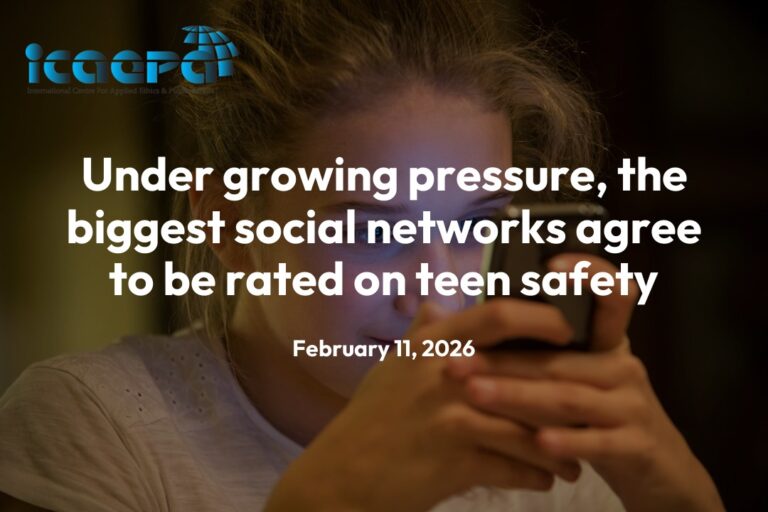
Under growing pressure, the biggest social networks agree to be rated on teen safety Bioethics Education
February 11, 2026

Under growing pressure, the biggest social networks agree to be rated on teen safety

Dark Instagram icon

(Washington Post via MSN) – Three leading social media companies have agreed to undergo independent assessments of how effectively they protect the mental health of teenage users, submitting to a battery of tests announced Tuesday by a coalition of advocacy organizations.

The platforms will be graded on whether they mandate breaks and provide options to turn off endless scrolling, among a host of other measures of their safety policies and transparency commitments. Companies that reviewers rate highly will receive a blue shield badge, while those that fair poorly will be branded as not able to block harmful content. Meta — which operates Facebook and Instagram — TikTok and Snap are first three companies to sign up for the process. (Read More)

Read Article
University of Minnesota med school changes class after accusations of UnitedHealth ‘propaganda’ Bioethics Education
February 11, 2026

University of Minnesota med school changes class after accusations of UnitedHealth ‘propaganda’

black and white image of a stethoscope

(Minnesota Star Tribune) – The school is changing an elective course while still working with the Eden Prairie-based health care giant after students raised concerns.

The University of Minnesota is revising a Medical School class financially supported by UnitedHealth Group after critics argued that the for-profit insurershouldn’t have a role in educating future doctors.

The course covers a topic called “value-based care,” an umbrella term used by the federal government and health insurers to describeprograms and contracts that promote improved health care quality at a lower cost. (Read More)

Read Article
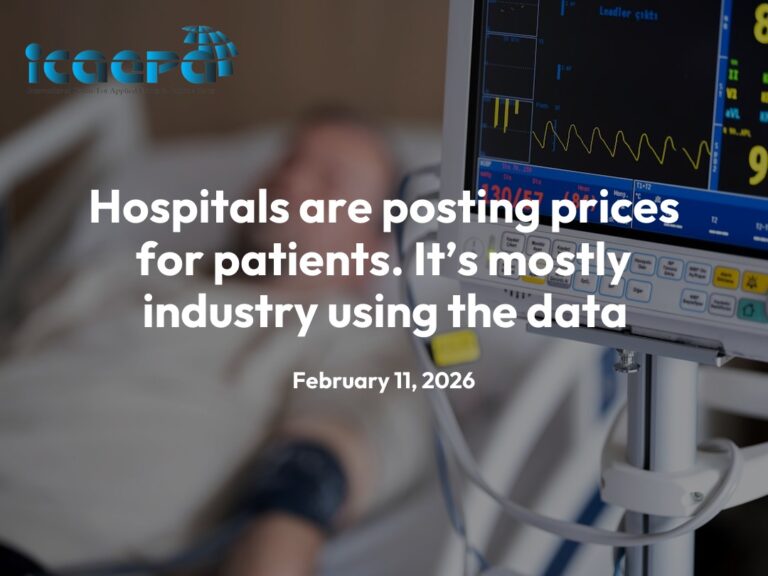
Hospitals are posting prices for patients. It’s mostly industry using the data Bioethics Education
February 11, 2026

Hospitals are posting prices for patients. It’s mostly industry using the data

Close up of a form and a hand with a pen

(NPR) – But amid low compliance and other struggles implementing the policy since it took effect in 2021, the available price data is sparse and often confusing. And instead of patients shopping for medical services, it’s mostly health systems and insurers using the little data there is, turning it into fodder for negotiations that determine what medical professionals and facilities get paid for what services.

“We use the transparency data,” said Eric Hoag, an executive at Blue Cross Blue Shield of Minnesota, noting that the insurer wants to make sure providers aren’t being paid substantially different rates. It’s “to make sure that we are competitive, or, you know, more than competitive against other health plans.” (Read More)

Read Article
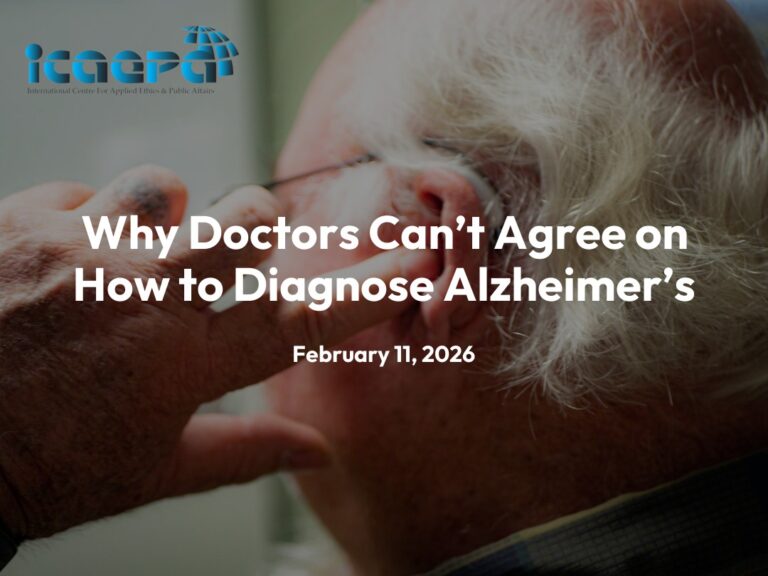
Why Doctors Can’t Agree on How to Diagnose Alzheimer’s Bioethics Education
February 11, 2026

Why Doctors Can’t Agree on How to Diagnose Alzheimer’s

MRI images of the brain

(WSJ) – Divergent diagnostic criteria is raising concerns that some patients are being misdiagnosed and unnecessarily treated

Divergent diagnoses for Alzheimer’s are the result of different criteria for diagnosing the disease. Some doctors worry the differing approaches can result in patients going misdiagnosed, or worse, being prescribed medications with potential negative health effects. 

The problem highlights a larger question: How should Alzheimer’s disease be defined? Is it a biological disease based solely on the presence of brain proteins? Or is it a more complicated diagnosis that involves weighing risk and other factors? (Read More)

Read Article
OpenAI Executive Who Opposed ‘Adult Mode’ Fired for Sexual Discrimination Bioethics Education
February 11, 2026

OpenAI Executive Who Opposed ‘Adult Mode’ Fired for Sexual Discrimination

OpenAI logo with a metallic outline of a brain

(WSJ) – The executive, who was accused of sexual discrimination against a male employee, had raised concerns about upcoming launch of erotic content

OpenAI said Beiermeister “made valuable contributions during her time at OpenAI, and her departure was not related to any issue she raised while working at the company.” 

Beiermeister served as the vice president leading OpenAI’s product policy team, which develops rules for how people can use the company’s products and helps design the enforcement mechanisms for those policies.

Her ousting came ahead of OpenAI’s planned launch early this year of a mode that will allow users to create AI erotica in ChatGPT. The planned feature, which would permit adult-themed conversation including sexual topics for adult users, has drawn criticism from researchers at the company who have studied the ways some people develop unhealthy attachments to chatbots, according to some of the people. (Read More)

Read Article
AI Chatbots Give Bad Health Advice, Research Finds Bioethics Education
February 11, 2026

AI Chatbots Give Bad Health Advice, Research Finds

(AFP via Barron’s) – Next time you’re considering consulting Dr ChatGPT, perhaps think again.

Despite now being able to ace most medical licensing exams, artificial intelligence chatbots do not give humans better health advice than they can find using more traditional methods, according to a study published on Monday.

“Despite all the hype, AI just isn’t ready to take on the role of the physician,” study co-author Rebecca Payne from Oxford University said. (Read More)

Read Article
GLP-1 obesity drugs can complicate life for people with disordered eating Bioethics Education
February 5, 2026

GLP-1 obesity drugs can complicate life for people with disordered eating

A person in a hospital gown

(NPR) – The increased availability and effectiveness of GLP-1s at curbing appetite is adding to the vulnerabilities for some people prone to eating disorders. They’re easy to obtain online, with little screening. Meanwhile, eating disorders are very common. Nearly a tenth of people will meet the clinical benchmarks of an eating disorder at some point in their lives. And, experts say, a far greater percentage of Americans have problematic relationships with eating and body weight that fall short of the clinical definition. So far, very little is known about how GLP-1 use — or misuse — affects people who binge or restrict food, despite the prevalence of those behaviors. (Read More)

Read Article
My Patient Was Dying. His Wife Refused to Accept It. Bioethics Education
February 5, 2026

My Patient Was Dying. His Wife Refused to Accept It.

saline bag hanging from rack

(New York Times) – His wife paced the room as she talked, her tone pressured. She wanted to know what we were going to do next — surely, we would transfuse and restart antibiotics. I explained our care plans for the day but reiterated, as we did daily, that her husband was dying. His liver cancer could no longer be treated and had now caused other organs to fail.

She asked about a liver transplant. I told her he was too sick. I had the sense that she felt solely responsible for her husband’s outcome — that we would let him die if it were not for her advocacy. But he would die regardless. (Read More)

Read Article
Wegovy pill in high demand in weeks since launch, Novo Nordisk says Bioethics Education
February 5, 2026

Wegovy pill in high demand in weeks since launch, Novo Nordisk says

A picture of a slide adjusting scale

(NBC News) – Novo Nordisk said Wednesday that demand for its Wegovy pill got off to a strong start after it launched in the U.S. in early January.

By Jan. 23 — less than three weeks after it became available — about 50,000 prescriptions were being filled each week, according to the drugmaker. In total, more than 170,000 people are taking the drug.

Roughly 9 in 10 of those prescriptions were paid for out of pocket, rather than through insurance. (Read More)

Read Article