Category: Bioethics Education

Grail’s Cancer Detection Test Fails in Major Study Bioethics Education

February 20, 2026

Grail’s Cancer Detection Test Fails in Major Study

An array of vials from blood tests.

(NYTs) – A closely watched clinical trial in Britain that screened blood for early detection of cancer did not show a reduction in diagnoses at later stages of the disease.

A promising blood test aimed at early detection of cancer failed to reduce late-stage cancer diagnoses in a major clinical trial, the test’s maker, Grail, announced on Thursday.

The results cast doubt on a developing field of screening for diseases that has generated enormous hopes and investment. The goal of the blood tests is to save and extend lives by detecting cancers when they can be more easily and successfully treated. (Read More)
Read Article
Why does women’s pain last longer than men’s? A new study offers an answer Bioethics Education
February 20, 2026

Why does women’s pain last longer than men’s? A new study offers an answer

A doctor and a woman talking

(NBC News) – The research suggests that men’s immune systems have a better mechanism for shutting off pain, which could explain why women have more chronic symptoms.

Historically, some doctors have dismissed these differences as women exaggerating their pain or being unable to tolerate the same discomfort as men. But studies have repeatedly found that women are more likely to experience chronic pain in general and that their pain lasts longer, on average.

A study published Friday in the journal Science Immunology offers a clue as to why: Men’s immune systems may have a better mechanism for shutting off pain, likely because of their higher testosterone levels. (Read More)

Read Article
Distraught family blasts Canada for euthanizing son, 26, who suffered from ‘seasonal depression’ Bioethics Education
February 20, 2026

Distraught family blasts Canada for euthanizing son, 26, who suffered from ‘seasonal depression’

fall leaves in a water

(Daily Mail) – A family has accused Canada’s laws of ‘killing the disabled and vulnerable’ months after their son, who suffered from seasonal depression, died by assisted suicide. 

Kiano Vafaeian, a 26-year-old blind man with Type 1 diabetes, died in December using Canada’s Medical Assistance in Dying (MAID) program, which allows patients with ‘grievous and irremediable’ medical conditions to request a lethal drug. 

Eligibility was expanded in 2021 to include people with chronic illnesses, disabilities and, pending parliamentary review, potentially individuals with certain mental health conditions. (Read More)

Read Article
N.J. woman thought her birth control was safe. Now she’s one of over 2,000 suing Pfizer. Bioethics Education
February 20, 2026

N.J. woman thought her birth control was safe. Now she’s one of over 2,000 suing Pfizer.

A gavel on an opened book

(NJ.com via Yahoo!) – Blonski didn’t know the contraception she’d taken for two decades may be linked to her health problems.

She was unaware of the connection until very recently, following publicity around a March 2024 study in The British Medical Journal that found women who used Depo‑Provera for at least a year faced a fivefold increased risk of developing brain tumors.

Depo-Provera is a long-acting injectable form of birth control administered every three months, according to the U.S. Food and Drug Administration. (Read More)

Read Article
It Was Too Easy for Her to Kill Herself Bioethics Education
February 20, 2026

It Was Too Easy for Her to Kill Herself

Unlabeled pill bottles in a pharmacy

(The Atlantic) – The case of Eileen Mihich should disturb both advocates and opponents of medically assisted suicide.

The four-star Hotel deLuxe in Portland, Oregon, features a soaring lobby with a gilded ceiling that drips with chandeliers. Eileen Mihich, a 31-year-old woman from nearby Beaverton, checked in on the afternoon of March 6, 2025. Two days later, a hotel employee named Stephen Jones noticed that Mihich had failed to check out at the appointed time and went to her eighth-floor room to investigate. No one answered, and the room was silent behind the door, so he let himself in. He found Mihich dead on the bed, with purpling skin. Jones immediately called the police, who noted the empty pill bottles at Mihich’s bedside, along with a pamphlet: “Step-by-Step Instructions for Taking Aid in Dying Medications.” (Read More)

Read Article
The Longevity Scam Bioethics Education
February 20, 2026

The Longevity Scam

A dropper of yellow liquid into a brown bottle

(The Atlantic) – Today’s longevity-medicine movement is driven by the same aggressive desire for eternal youth as the mythic stories of old. But whereas in earlier times ideas about wellness could travel only as fast as the people who held them, today just about anyone with an internet connection can use social media and AI-generated graphics to sell medical advice in seconds. Despite a decided shortage of placebo-controlled trials in humans to support that advice, the business of longevity is booming, thanks in large part to sleek direct-to-consumer marketing delivered by health influencers with far more confidence than evidence. By 2030, $8 trillion might be spent annually on longevity-related products.

As a sports-medicine physician, I see the consequences of the modern longevity obsession up close. Patients arrive at my office convinced that the right peptides, cold plunges, or lab tests can meaningfully extend their lives. They’re almost certainly headed for disappointment—if not harm. (Read More)

Read Article
Family deepfakes help people celebrate and grieve in India Bioethics Education
February 20, 2026

Family deepfakes help people celebrate and grieve in India

translucent digital image of a person

(Rest of World) – There is growing demand for recreating dead and absent family members for events using AI.

Sharma is among a growing number of Indians discovering the power of AI deepfakes to resurrect dead family members, create voice clones of the departed, and add absent guests to family celebrations. AI tools such as OpenAI’s Sora, Google’s Nano Banana, and Midjourney have made it easier to create images and videos that can fool even experts. Cashing in are entrepreneurs in small towns and cities, who have learned how to use these tools from YouTube tutorials and online forums. (Read More)

Read Article
The Key to Longevity May Be Found Inside Our Cells Bioethics Education
February 19, 2026

The Key to Longevity May Be Found Inside Our Cells

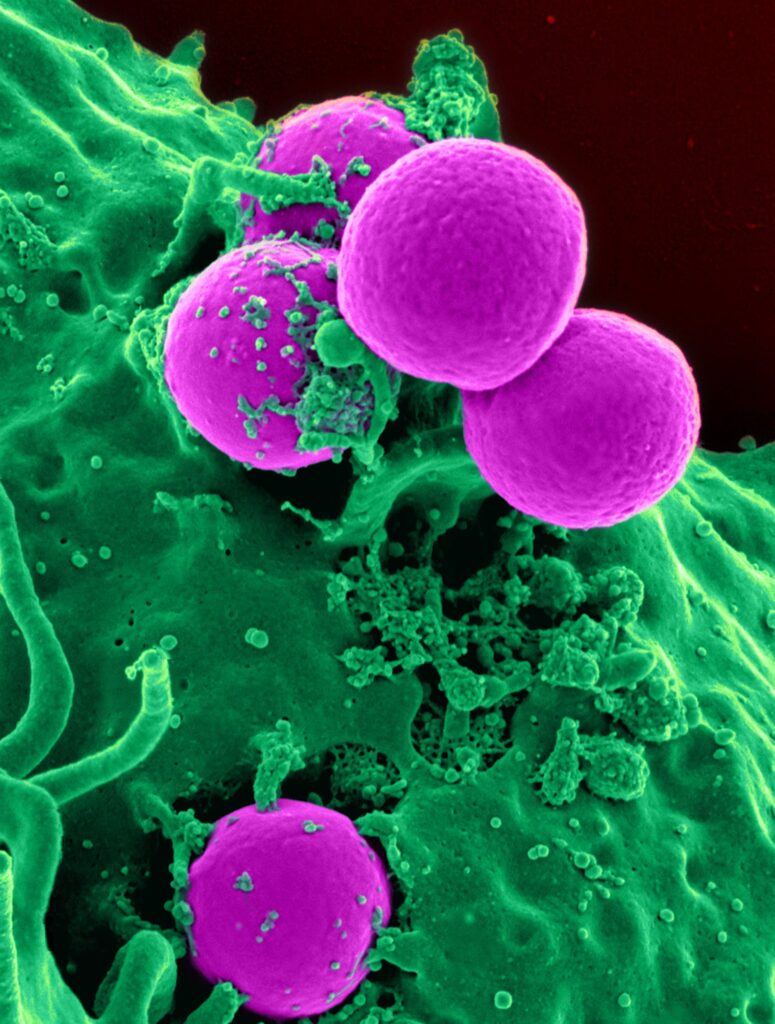
purple cells on a green medium

(New York Times) – Last summer, Health Secretary Robert F. Kennedy Jr. said he could tell that someone was having “mitochondrial challenges” just by looking at them. The nominee for surgeon general, Dr. Casey Means, features mitochondria prominently in her book on metabolism and health. And several trendy supplements marketed for longevity, such as coenzyme Q10, urolithin A and those that boost N.A.D.+, purportedly work by enhancing mitochondrial functioning.

Scientists who study mitochondria are somewhat baffled by the newfound attention. But they’re also excited to see their favorite organelle in the spotlight. (Read More)

Read Article
Google DeepMind wants to know if chatbots are just virtue signaling Bioethics Education
February 19, 2026

Google DeepMind wants to know if chatbots are just virtue signaling

(MIT Tech Review) – We need to better understand how LLMs address moral questions if we’re to trust them with more important tasks.

Google DeepMind is calling for the moral behavior of large language models—such as what they do when called on to act as companions, therapists, medical advisors, and so on—to be scrutinized with the same kind of rigor as their ability to code or do math.

As LLMs improve, people are asking them to play more and more sensitive roles in their lives. Agents are starting to take actions on people’s behalf. LLMs may be able to influence human decision-making. And yet nobody knows how trustworthy this technology really is at such tasks. (Read More)

Read Article
Silicon Valley is building a shadow power grid for data centers across the U.S. Bioethics Education
February 19, 2026

Silicon Valley is building a shadow power grid for data centers across the U.S.

(Washington Post) – Tech companies are building data centers with their own private power plants, a risky bet that will increase carbon emissions and other pollution.

After the rapid growth of data centers triggered pushback from politicians, utilities and local residents over the pressures they place on the grid, tech companies are now building their own fleet of private power plants, mostly fueled by natural gas. (Read More)

Read Article
The Biophysical World Inside a Jam-Packed Cell Bioethics Education
February 19, 2026

The Biophysical World Inside a Jam-Packed Cell

(Quanta Magazine) – Innovations in imaging and genetic engineering are coming together to probe the biophysics of cytoplasm inside living animals.

Over the past few years, thanks to stunning advances in imaging and genetic engineering, scientists have been able to observe and measure crowding inside cells in living organisms for the first time. The experiments have revealed a more dynamic and crowded place than anyone expected, and are the latest evidence that cells actively regulate their internal crowdedness to optimize for the chemical reactions required for life.

Read Article
AI uncovers the hidden genetic control centers driving Alzheimer’s Bioethics Education
February 18, 2026

AI uncovers the hidden genetic control centers driving Alzheimer’s

Translucent image of a brain

(Science Daily) – Scientists have created the most detailed maps yet of how genes control one another inside the brains of people with Alzheimer’s disease. Using a powerful new AI-based system called SIGNET, the team uncovered cause-and-effect relationships between genes across six major brain cell types, revealing which genes are truly driving harmful changes. The most dramatic disruptions were found in excitatory neurons, where thousands of genetic interactions appear to be extensively rewired as the disease progresses. (Read More)

Read Article
F.D.A. Reverses Decision and Agrees to Review Moderna’s Flu Vaccine Bioethics Education
February 18, 2026

F.D.A. Reverses Decision and Agrees to Review Moderna’s Flu Vaccine

picture of the U.S. Food and Drug Administration sign

(New York Times) – Moderna held further discussions with regulators and announced that the agency would accept the company’s application for approval of its flu vaccine that uses mRNA technology.

The Food and Drug Administration reversed its decision on Moderna’s flu vaccine and has agreed to review it for possible approval.

Just last week, Moderna announced that the agency had rejected its application for review of a new flu vaccine. The F.D.A. said the company’s research design had been flawed.

But in subsequent discussions, the agency had relented and agreed to begin a review, the company said on Wednesday. (Read More)

Read Article
The Atlantic’s essay about measles was gut-wrenching. Some readers feel deceived. Bioethics Education
February 18, 2026

The Atlantic’s essay about measles was gut-wrenching. Some readers feel deceived.

Newspaper stand with the Wall Street Journal

(Washington Post) – Some critics and physicians said Elizabeth Bruenig’s second-person account of a mother confronting a child’s death from measles felt misleading once they learned the story was reported fiction.

Bruenig’s stirring account of a mother’s experience learning her child will die of the long-term effects of measles has remained one of the Atlantic’s most read stories since it was published Thursday, receiving more than 700 comments. Some readers have called the essay, written in the second person, a visceral and gut-wrenching exposéof the human impacts of the measles epidemic.

It has also generated controversy. Readers and media experts have condemned the story as breaching journalistic ethics by informing the reader that the story is fictionalized through a short editor’s note at the end of the 3,000-word essay. Some public health experts argued the story was a dangerous writing exercise that could evoke backlash and confusion as vaccine skepticism hits an all-time high across the country. (Read More)

Read Article
A New Concern About Weight Loss Drugs: What if They Work Too Well? Bioethics Education
February 18, 2026

A New Concern About Weight Loss Drugs: What if They Work Too Well?

A picture of a slide adjusting scale

(New York Times) – Some patients in a clinical trial of one new drug lost so much weight that they became concerned and dropped out.

Recent top-line results from a recent trial on retatrutide, a compound that Eli Lilly is developing, found that people with obesity and knee osteoarthritis lost an average of 28.7 percent of their body weight after 68 weeks on the highest dose. Currently available weight-loss drugs have helped people lose around 20 percent of their body weight over the same time period.

Between 12 and 18 percent of participants dropped out of the trial because of side effects, a higher percentage than is typical in trials of existing weight loss drugs. (Read More)

Read Article