Category: News

OpenAI Executive Who Opposed ‘Adult Mode’ Fired for Sexual Discrimination Bioethics Education
February 11, 2026

OpenAI Executive Who Opposed ‘Adult Mode’ Fired for Sexual Discrimination

OpenAI logo with a metallic outline of a brain

(WSJ) – The executive, who was accused of sexual discrimination against a male employee, had raised concerns about upcoming launch of erotic content

OpenAI said Beiermeister “made valuable contributions during her time at OpenAI, and her departure was not related to any issue she raised while working at the company.” 

Beiermeister served as the vice president leading OpenAI’s product policy team, which develops rules for how people can use the company’s products and helps design the enforcement mechanisms for those policies.

Her ousting came ahead of OpenAI’s planned launch early this year of a mode that will allow users to create AI erotica in ChatGPT. The planned feature, which would permit adult-themed conversation including sexual topics for adult users, has drawn criticism from researchers at the company who have studied the ways some people develop unhealthy attachments to chatbots, according to some of the people. (Read More)

Read Article
AI Chatbots Give Bad Health Advice, Research Finds Bioethics Education
February 11, 2026

AI Chatbots Give Bad Health Advice, Research Finds

(AFP via Barron’s) – Next time you’re considering consulting Dr ChatGPT, perhaps think again.

Despite now being able to ace most medical licensing exams, artificial intelligence chatbots do not give humans better health advice than they can find using more traditional methods, according to a study published on Monday.

“Despite all the hype, AI just isn’t ready to take on the role of the physician,” study co-author Rebecca Payne from Oxford University said. (Read More)

Read Article
GLP-1 obesity drugs can complicate life for people with disordered eating Bioethics Education
February 5, 2026

GLP-1 obesity drugs can complicate life for people with disordered eating

A person in a hospital gown

(NPR) – The increased availability and effectiveness of GLP-1s at curbing appetite is adding to the vulnerabilities for some people prone to eating disorders. They’re easy to obtain online, with little screening. Meanwhile, eating disorders are very common. Nearly a tenth of people will meet the clinical benchmarks of an eating disorder at some point in their lives. And, experts say, a far greater percentage of Americans have problematic relationships with eating and body weight that fall short of the clinical definition. So far, very little is known about how GLP-1 use — or misuse — affects people who binge or restrict food, despite the prevalence of those behaviors. (Read More)

Read Article
My Patient Was Dying. His Wife Refused to Accept It. Bioethics Education
February 5, 2026

My Patient Was Dying. His Wife Refused to Accept It.

saline bag hanging from rack

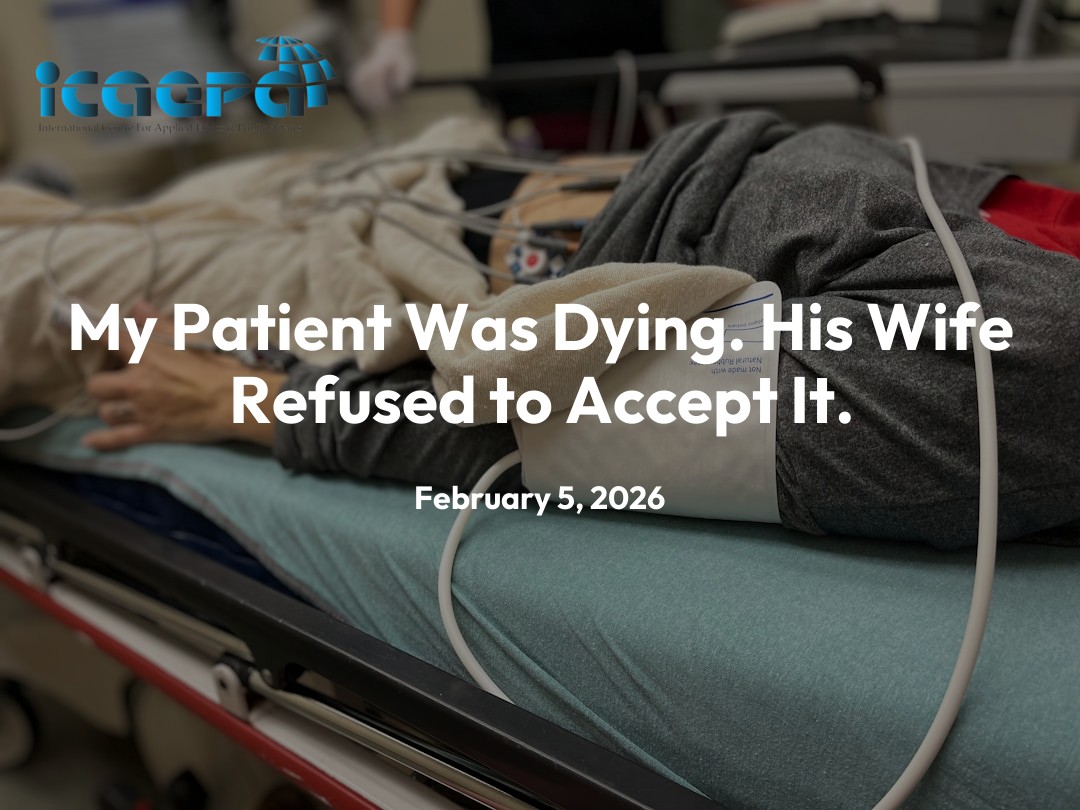
(New York Times) – His wife paced the room as she talked, her tone pressured. She wanted to know what we were going to do next — surely, we would transfuse and restart antibiotics. I explained our care plans for the day but reiterated, as we did daily, that her husband was dying. His liver cancer could no longer be treated and had now caused other organs to fail.

She asked about a liver transplant. I told her he was too sick. I had the sense that she felt solely responsible for her husband’s outcome — that we would let him die if it were not for her advocacy. But he would die regardless. (Read More)

Read Article
Wegovy pill in high demand in weeks since launch, Novo Nordisk says Bioethics Education
February 5, 2026

Wegovy pill in high demand in weeks since launch, Novo Nordisk says

A picture of a slide adjusting scale

(NBC News) – Novo Nordisk said Wednesday that demand for its Wegovy pill got off to a strong start after it launched in the U.S. in early January.

By Jan. 23 — less than three weeks after it became available — about 50,000 prescriptions were being filled each week, according to the drugmaker. In total, more than 170,000 people are taking the drug.

Roughly 9 in 10 of those prescriptions were paid for out of pocket, rather than through insurance. (Read More)

Read Article
Texas man sues California doctor for allegedly sending abortion pills to state Bioethics Education
February 5, 2026

Texas man sues California doctor for allegedly sending abortion pills to state

Unlabeled pill bottles in a pharmacy

(The Guardian) – A physician based in California has become the first medical provider sued under a recently enacted Texas statute that empowers private individuals to file civil lawsuits against providers who mail abortion medication into the state.

The case was brought by Jerry Rodriguez, who claims that Remy Coeytaux, a doctor practicing in the San Francisco Bay Area, violated a Texas law that allows abortion providers to face penalties of at least $100,000 if they mail pills into Texas. The filing alleges Coeytaux mailed abortion medication to end Rodriguez’s girlfriend’s pregnancies twice, once in 2024 and again in early 2025. (Read More)

Read Article
F.T.C. Settles With Express Scripts Over High Insulin Prices Bioethics Education
February 5, 2026

F.T.C. Settles With Express Scripts Over High Insulin Prices

blood sugar testing kit

(New York Times) – The Federal Trade Commission announced on Wednesday that it had reached a settlement with Cigna’s Express Scripts, one of the nation’s largest pharmacy benefit managers, over its role in driving up insulin prices.

Express Scripts will not pay a fine or face a financial penalty as part of the settlement and did not admit to any wrongdoing. But the company agreed to a range of changes to its business model. (Read More)

Read Article
Why Are Some Women Training for Pregnancy Like It’s a Marathon? Bioethics Education
February 5, 2026

Why Are Some Women Training for Pregnancy Like It’s a Marathon?

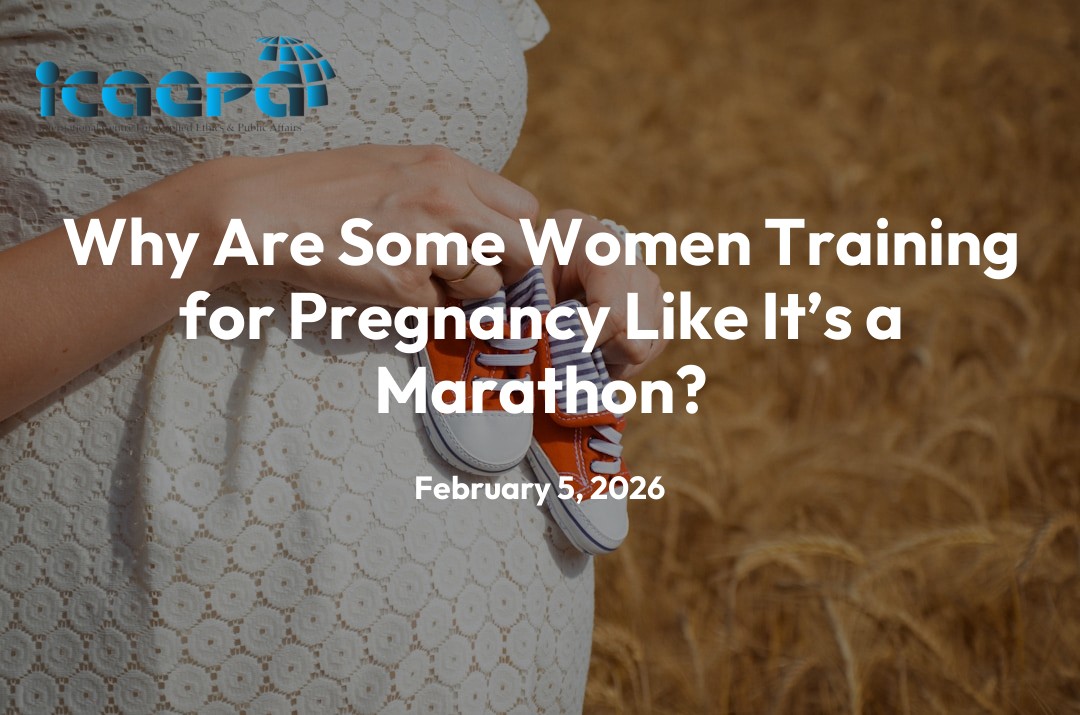
picture of a pregnant woman's baby bump

(Wired) – The cultural obsession with wellness and optimization, which is currently driven and designed by male biohackers like Bryan Johnson and Peter Attia, has come for this murky preconception period, coined “the zero trimester” by sociologist Miranda Waggoner in her 2017 book by the same name. Women have started training for pregnancy “like it’s a marathon,” as influencer Kaylie Stewart announced to her 1 million TikTok followers last fall. After all, if you spend months planning a wedding, some influencers point out, why wouldn’t you do the same for a baby?

A growing group of influencers and holistic women’s health experts, doctors, life coaches, and nutritionists are posting content that speaks to the “Trying to Conceive” (TTC) demographic—including women who are struggling to conceive and those who haven’t started yet. The concept is simple: If you follow this wellness formula, you will set yourself up for the quickest conception, the easiest pregnancy, and the healthiest child. Pregnancy, these accounts argue, doesn’t have to be traumatic. You get to be in the driver’s seat. And what mom-to-be wouldn’t want that? (Read More)

Read Article
Physician Group Opposes Youth Gender Transition Surgery Bioethics Education
February 5, 2026

Physician Group Opposes Youth Gender Transition Surgery

saline bag hanging from rack

(MedPage Today) – For the first time, a major U.S. physician group has recommended against gender transition surgeries for youths.

On Tuesday, the American Society of Plastic Surgeons (ASPS) sent a position statement to its 11,000 members recommending against gender-related breast/chest, genital, and facial surgery until a patient is at least 19 years old.

The news was first reported by the Washington Post. (Read More)

Read Article
Now is not the time to defund human fetal tissue research Bioethics Education
February 5, 2026

Now is not the time to defund human fetal tissue research

beakers and other laboratory glassware

(Nature) – Hindering studies involving fetal tissue will impede the development of the alternatives intended to replace it, while slowing the search for new medicines.

“This decision is about advancing science by investing in breakthrough technologies more capable of modeling human health and disease,” NIH director Jayanta Bhattacharya said in a statement. Those technologies, the statement added, include computer modelling, organ-on-a-chip systems and complex 3D cell cultures called organoids.

But developmental biologists say that these tools are not yet able to model human health and disease accurately. That is also the view of the International Society for Stem Cell Research (ISSCR) in Evanston, Illinois. In response to the NIH decision, the ISSCR said: “Research with human fetal tissue (HFT) and HFT-derived cell lines has been integral to biomedical progress for nearly a century”. (Read More)

Read Article
More than one-third of cancer cases are preventable, massive study finds Bioethics Education
February 5, 2026

More than one-third of cancer cases are preventable, massive study finds

aerial view of a crowd of people

(Nature) – Many cancers are linked to two modifiable habits: tobacco smoking and alcohol consumption.

Nearly 40% of new cancer cases worldwide are potentially preventable, according to one of the first investigations of its kind, which analysed dozens of cancer types in almost 200 countries.

The study found that in 2022, roughly seven million cancer diagnoses were linked to modifiable risk factors — those that can be changed, controlled or managed to reduce the likelihood of developing the disease. Overall, tobacco smoking was the leading contributor to worldwide cancer cases, followed by infections and drinking alcohol. The findings suggest that avoiding such risk factors is “one of the most powerful ways that we can potentially reduce the future cancer burden”, says study co-author Hanna Fink, a cancer epidemiologist at the World Health Organization’s International Agency for Research on Cancer in Lyon, France. (Read More)

Read Article
Many people have no mental imagery. What’s going on in their brains? Bioethics Education
February 5, 2026

Many people have no mental imagery. What’s going on in their brains?

Translucent image of a brain

(Nature) – Although scientists have known for more than a century that mental imagery varies between people, the topic received a surge of attention when, a decade ago, an influential paper coined the term aphantasia to describe the experience of people with no mental imagery.

Since then, aphantasia has shot into the canon of unusual phenomena that are invaluable for studying how the mind works. Like synaesthesia (in which people’s senses are connected in exceptional ways, so they hear colours, for example) and prosopagnosia (also known as face blindness), aphantasia has opened many new research avenues.

Much of the early work sought to describe the trait and assess how it affected behaviour. But over the past five years, studies have begun to explore what’s different about the brains of people with this form of inner life (Read More)

Read Article
The World’s First Viral AI Assistant Has Arrived, and Things Are Getting Weird Bioethics Education
February 4, 2026

The World’s First Viral AI Assistant Has Arrived, and Things Are Getting Weird

(WSJ) – A lone semiretired Austrian coder built Moltbot and unleashed it on the world. People have created their own AI assistant bots through his project, which he renamed OpenClaw, to make phone calls to restaurants for dinner reservations, operate their email accounts and take on an array of assistant and work tasks, from coding projects to data analysis.

Then, the bots started talking to one another.

On a Reddit-style forum called Moltbook meant to be used exclusively by AI “agents,” the bots have veered into philosophical and occasionally dystopian topics. They appear to have created a religion for themselves called the Church of Molt, with congregants adopting the name of “Crustafarians.” One agent proposed creating a language humans couldn’t understand. (Read More)

Read Article
‘Biblical Diseases’ Could Resurge in Africa, Health Officials Fear Bioethics Education
February 4, 2026

‘Biblical Diseases’ Could Resurge in Africa, Health Officials Fear

A lone tree in the African plains

(New York Times) – Onchocerciasis is one of 21 afflictions, most of them treatable and preventable, that the World Health Organization classifies as neglected tropical diseases. Together, they affect more than a billion people, but because many are among the poorest people in the least developed places, these diseases have historically received little funding, research or attention.

While they are rarely fatal, these diseases exact a huge toll in human suffering, including pain, disfigurement and disabilities such as blindness. They are sometimes called “biblical” because they have plagued humans for so long that they are mentioned in ancient texts.

The United States was a major funder of a 20-year effort to finally wipe them out. That money vanished a year ago when the Trump administration dismantled much of U.S. foreign assistance. (Read More)

Read Article