Blog

Parents say teens are addicted to social media. Now, a jury will decide. Bioethics Education
January 26, 2026

Parents say teens are addicted to social media. Now, a jury will decide.

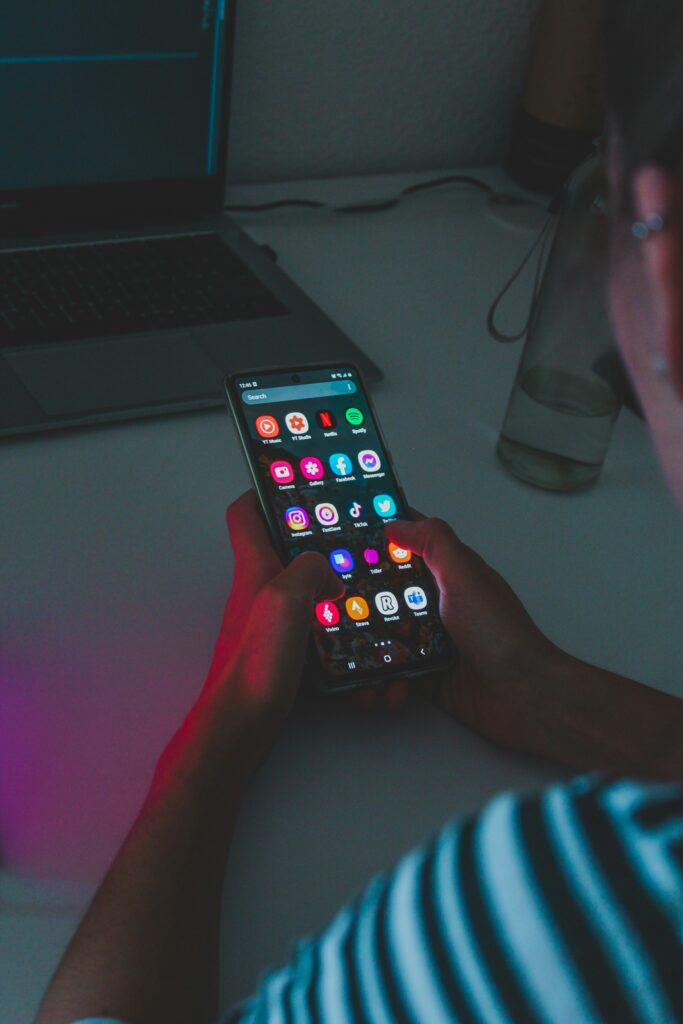
a person looking at a phone with social media apps

(Washington Post via Yahoo!) – For years, parents alleged that top social media companies had gotten teens hooked on their products with addictive design features, arguing in legal filings these choices led to depression, anxiety, eating disorders – and in some tragic circumstances – death.

These stories helped spur a sweeping regulatory movement that led states and governments around the world to pass laws restricting teens’ use of social media and forced tech companies to take bolder actions to protect young people.

Now, those concerned parents will make their argument in court this week when the first of several high-profile social media addiction lawsuits against Meta, TikTok and YouTube goes to trial. These suits will test the proposition of whether social media causes psychological harm, which could have profound implications for the industry along with ordinary consumers. (Read More)
Read Article
Pope Leo warns of ‘overly affectionate’ AI chatbots Bioethics Education
January 26, 2026

Pope Leo warns of ‘overly affectionate’ AI chatbots

A close-up of a wood rosary

(CNN) – Beware of the AI chatbot that becomes more than just a friend, or worse, an emotional crutch. Pope Leo XIV has warned about overly “affectionate” chatbots, urging regulation to prevent humans from forming serious emotional bonds with their AI companions.

The US-born pontiff, writing in a message ahead of the Catholic Church’s annual World Day of Social Communications, said artificial intelligence risked diluting human creativity and decision-making. (Read More)

Read Article
COVID’s long shadow looms over a new generation of college students Bioethics Education
January 26, 2026

COVID’s long shadow looms over a new generation of college students

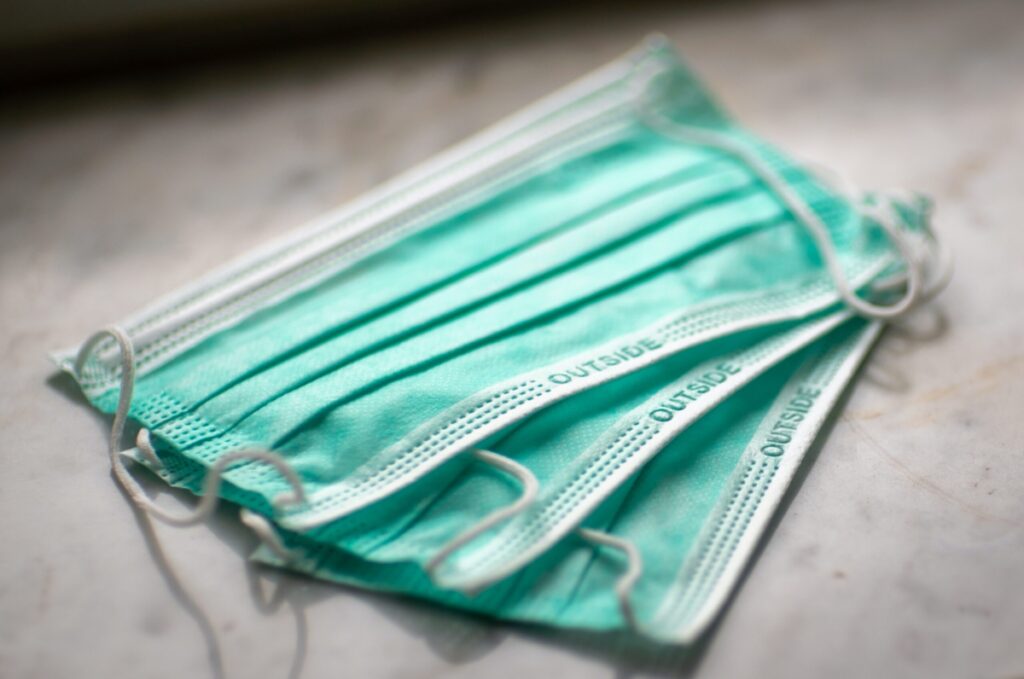
3 unused face masks

(SF Gate) – Nearly six years later, a generation of first-year college students is still feeling the fallout, shaped by years of online high school, isolation and disrupted learning during some of their most formative years. Even as college life is back to business as usual, educators say the pandemic’s academic and emotional aftershocks remain. The students in the “COVID cohort,” or those who graduated high school after 2020, are starting college with noticeable learning gaps and deep anxiety about belonging, effects that experts warn could linger for years. (Read More)

Read Article
Increased Scrutiny Leads to an Improved Organ Transplant System Bioethics Education
January 23, 2026

Increased Scrutiny Leads to an Improved Organ Transplant System

(New York Times) – A crackdown on problems with fairness and safety is achieving results, including a big drop in the number of sick patients being passed over for transplants.

For years, the nonprofit groups that coordinate transplants in the United States regularly ignored federal rules — skipping patients at the top of waiting lists and sending organs to those who weren’t as sick and hadn’t waited as long.

But new federal data shows that the rate of skipped patients has dropped by more than half in recent months, a change that reflects a far-reaching effort to make the transplant system fairer and safer. (Read More)

Read Article
U.S. Psychedelic Use and Microdosing in 2025 Bioethics Education
January 23, 2026

U.S. Psychedelic Use and Microdosing in 2025

cluster of mushrooms

(RAND) – This is the first report from the 2025 RAND Psychedelics Survey, which was fielded in September 2025 to a probability-based, nationally representative sample⁠[1] of 10,122 adults ages 18 years and older living in the United States at that time. This report presents top-line results on the use of 11 psychedelic substances and detailed information about microdosing (i.e., taking a small fraction of a full dose, often intermittently on a schedule) for psilocybin, LSD, and MDMA. These results should be of interest to those contemplating changes to psychedelics policies, researchers interested in use patterns (especially for microdosing), and others interested in learning more about these substances. (Read More)

Read Article
US officially leaves World Health Organization Bioethics Education
January 23, 2026

US officially leaves World Health Organization

Image of a globe

(BBC) – The US has officially withdrawn from the World Health Organization (WHO), leaving the UN agency without one of its biggest donors.

US President Donald Trump signed an executive order signalling the withdrawal a year ago, having criticised the organisation for being too “China-centric” during the Covid pandemic.

The US Department of Health and Human Services said it took the decision due to the WHO’s alleged “mishandling” of the pandemic, an inability to reform and political influence from member states. (Read More)

Read Article
5,500-year-old DNA shows syphilis was rooted in the Americas before Columbus Bioethics Education
January 23, 2026

5,500-year-old DNA shows syphilis was rooted in the Americas before Columbus

Agar plate with bacteria

(Washington Post via MSN) – From a 5,500-year-old human shin bone, scientists have discovered a close cousin of the pathogen that causes syphilis, providing the oldest evidence yet that the disease has ancient roots in the Americas, millennia before European contact.

A historical and scientific debate has raged about the origins of syphilis for hundreds of years, a geopolitical blame game intertwined with European colonialism, treatment of Indigenous people and stigma. Was the sexually transmitted disease that began to tear through Europe at the end of the 15th century brought back to the continent by Columbus, or was it already circulating in medieval Europe? (Read More)

Read Article
When two years of academic work vanished with a single click Bioethics Education
January 23, 2026

When two years of academic work vanished with a single click

A pair of glasses next to a cell phone with ChatGPT prompts.

(Nature) – After turning off ChatGPT’s ‘data consent’ option, Marcel Bucher lost the work behind grant applications, teaching materials and publication drafts. Here’s what happened next.

We are increasingly being encouraged to integrate generative AI into research and teaching. Individuals use it for writing, planning and teaching; universities are experimenting with embedding it into curricula. However, my case reveals a fundamental weakness: these tools were not developed with academic standards of reliability and accountability in mind.

If a single click can irrevocably delete years of work, ChatGPT cannot, in my opinion and on the basis of my experience, be considered completely safe for professional use. As a paying subscriber (€20 per month, or US$23), I assumed basic protective measures would be in place, including a warning about irreversible deletion, a recovery option, albeit time-limited, and backups or redundancy. (Read More)

Read Article
“Dr. Google” had its issues. Can ChatGPT Health do better? Bioethics Education
January 23, 2026

“Dr. Google” had its issues. Can ChatGPT Health do better?

(MIT Technology Review) – OpenAI’s newest product is no replacement for a doctor. But it might be better than searching the web for your symptoms.

Though ChatGPT Health lives in a separate sidebar tab from the rest of ChatGPT, it isn’t a new model. It’s more like a wrapper that provides one of OpenAI’s preexisting models with guidance and tools it can use to provide health advice—including some that allow it to access a user’s electronic medical records and fitness app data, if granted permission. There’s no doubt that ChatGPT and other large language models can make medical mistakes, and OpenAI emphasizes that ChatGPT Health is intended as an additional support, rather than a replacement for one’s doctor. But when doctors are unavailable or unable to help, people will turn to alternatives. (Read More)

Read Article
The Baby We Kept Bioethics Education
January 23, 2026

The Baby We Kept

Baby holding adult's hand

(Plough) – Our son Yusang has Down syndrome. He saved another child’s life.

My wife and I had just learned that a couple from our church were wrestling with grief and confusion, so that cold Sunday evening, I set out to visit them. They were expecting their third child, and initially they’d been overjoyed, but the baby did not seem to be developing normally, and the mother underwent a number of tests over several weeks. Now their doctor had diagnosed a genetic disorder called Trisomy 18. He told the parents that children with this condition are frequently stillborn or die soon after birth. If they do survive, the doctor went on to say, they almost certainly carry multiple physical and mental disabilities. He advised terminating the pregnancy, and they’d agreed to act on his advice. (Read More)

Read Article
Meta Seeks to Bar Mentions of Mental Health—and Zuckerberg’s Harvard Past—From Child Safety Trial Bioethics Education
January 23, 2026

Meta Seeks to Bar Mentions of Mental Health—and Zuckerberg’s Harvard Past—From Child Safety Trial

Close up of Facebook icon with 3 notifications.

(Wired) – The trial starts soon in New Mexico’s case against Meta—and the company is pulling out all the stops to protect its reputation.

Meta has emphasized in pretrial motions that the only questions the jury should be asked are whether Meta violated New Mexico’s Unfair Practices Act because of how it has allegedly handled child safety and youth mental health, and that other information—such as Meta’s alleged election interference and misinformation, or privacy violations—shouldn’t be factored in.

But some of the requests seem unusually aggressive, two legal scholars tell WIRED, including requests that the court not mention the company’s AI chatbots, and the extensive reputation protection Meta is seeking. WIRED was able to review Meta’s in limine requests through a public records request from the New Mexico courts. (Read More)

Read Article
The Multi-Trillion-Dollar Battle for Your Attention Is Built on a Lie Bioethics Education
January 23, 2026

The Multi-Trillion-Dollar Battle for Your Attention Is Built on a Lie

Close up of a doctor holding a cell phone

(New York Times) – We definitely have an attention problem, but it’s not just a function of the digital technology that pings and beeps and flashes and nudges us ever closer to despair. It starts with the way we think about attention in the first place. An industry estimated to be worth $7 trillion views attention in the narrowest possible way: as something that can be measured in terms of device-engaged, task-oriented productivity, then optimized and operationalized and profitably controlled. That narrow view of attention has become so dominant that it even pervades efforts at resistance, including the countless well-meaning calls to “improve focus” or “avoid distraction.” In our efforts to liberate ourselves, we have become anxious accountants of our own attention. (Read More)

Read Article
What Have We Learned From Centuries of Chasing Immortality? Bioethics Education
January 23, 2026

What Have We Learned From Centuries of Chasing Immortality?

A man with large muscles

(New York Times) – People, and men in particular, have long mixed solid science and serious quackery in the pursuit of longevity.

Whatever the maximum human life span may be, people appear increasingly determined to find it — in particular men, who are more inclined to favor radically extending life, maybe even indefinitely. Last year, nearly 6,000 studies of longevity made their way onto PubMed, a database of biomedical and life sciences papers; that’s almost five times as many as two decades ago.

Along with the creation of dozens of popular podcasts and a sizable supplement industry, that zeal has led to efforts to preserve organs, search out life-extending diets and even try to reverse aging itself. It’s the same mix of solid science, quixotic experimentation and questionable advice that has, for much of recorded history, defined the pursuit. (Read More)

Read Article
Surveillance and ICE Are Driving Patients Away From Medical Care, Report Warns Bioethics Education
January 22, 2026

Surveillance and ICE Are Driving Patients Away From Medical Care, Report Warns

A person in a hospital gown

(Wired) – A new EPIC report says data brokers, ad-tech surveillance, and ICE enforcement are among the factors leading to a “health privacy crisis” that is eroding trust and deterring people from seeking care.

When immigration agents enter hospitals, and private companies are allowed to buy and sell data that reveals who seeks medical care, patients retreat, treatment is delayed, and health outcomes worsen, according to a new report that describes a growing “health privacy crisis” in the United States driven by surveillance and weak law enforcement limits.

The report, published by the Electronic Privacy Information Center (EPIC), attributes the problem to outdated privacy laws and rapidly expanding digital systems that allow health-related information to be tracked, analyzed, breached, and accessed by both private companies and government agencies. (Read More)

Read Article
China’s ‘Dr. Frankenstein’ Thinks Time Is on His Side Bioethics Education
January 22, 2026

China’s ‘Dr. Frankenstein’ Thinks Time Is on His Side

A photo of a statue in China

(New York Times) – He Jiankui spent three years in prison after creating gene-edited babies. Now back at work, he sees a greater opening for researchers who push boundaries.

For creating the world’s first genetically edited babies, He Jiankui has been reviled as the Chinese Dr. Frankenstein. He was sent to prison for three years, convicted in China on charges of deceiving medical authorities.

But as China ramps up ambitions to become a biotechnology superpower, the disgraced researcher, 41, has not been muzzled or pushed into obscurity. Instead, he is living and speaking openly at his home in a government-backed research hub north of Beijing, boasting about his work and insisting his country is ready to embrace him.

He can’t travel abroad because his passport has been seized, but he has become a small, but outspoken figure in China’s biotech landscape, neither silenced nor fully rehabilitated. The question is why. (Read More)

Read Article