
Commentary By Dr Victor Chidi Wolemonwu
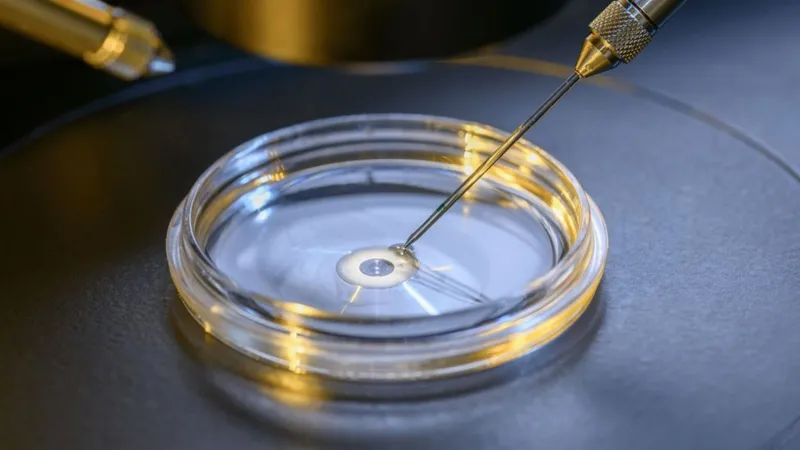
Imagine a world where the earliest stages of human life can be recreated in a petri dish, not from a mother’s egg or a father’s sperm, but from a simple stem cell.
It sounds like the plot of a sci-fi blockbuster, but as the BBC recently reported, this is our new reality. Scientists have successfully created “synthetic embryos” to study why pregnancies fail. But at ICAEPA, we’re asking the question that science often ignores: Just because we can, does it mean we should?
For anyone who has struggled with fertility or lost a pregnancy, this research is a beacon of hope. It could reveal why some embryos fail to implant, potentially saving thousands of families from heartbreak.
However, for the rest of us, it raises a chilling question: What is a human being? If a lab-grown model looks like an embryo and acts like an embryo, does it have a soul? Does it have rights?
Right now, the law is playing catch-up. There are strict rules about how “natural” embryos can be used in research, but these synthetic versions are so new they aren’t even mentioned in the rulebooks. This creates a “wild west” of biology where technology is moving faster than our morals.
Need to say that at the International Centre for Applied Ethics and Public Affairs, we believe that progress is only “progress” if it respects human dignity.
Is it a breakthrough? Yes.
Is it a tool? Maybe.
Is it “us”? That’s what we need to decide.
We want to hear from you: Does the idea of synthetic embryos make you feel hopeful for medicine, or uneasy about the future? Drop a comment below and let’s discuss the boundary between science and life.
To read more on the issue, Click Here