
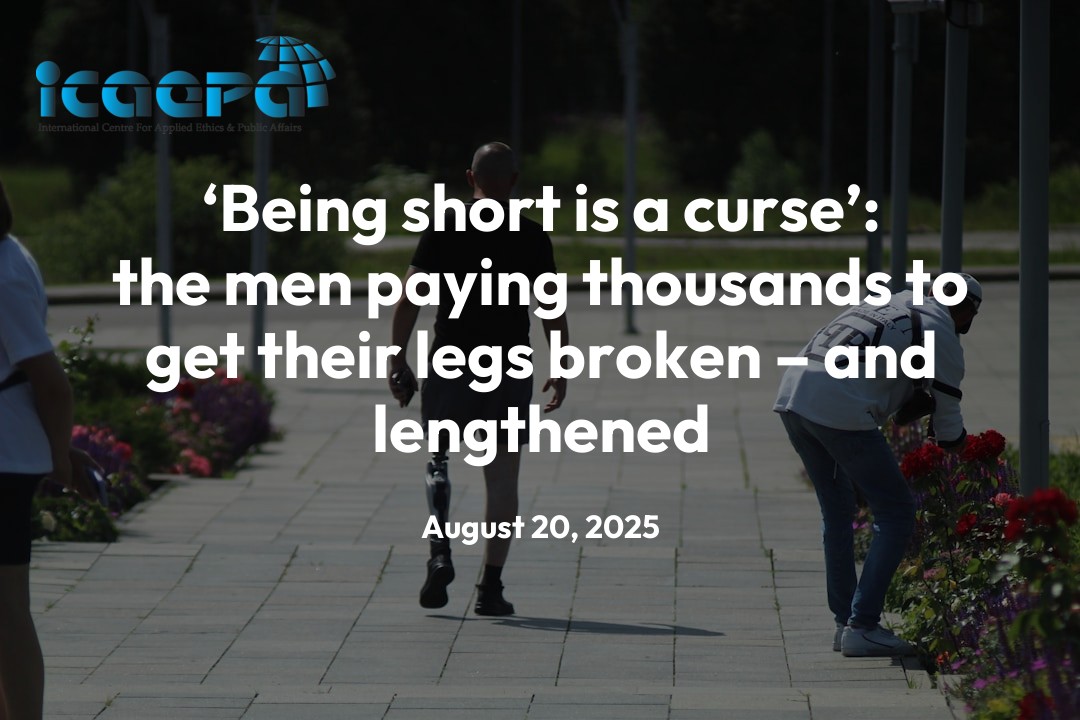
This analysis is based on an article originally published by The Guardian.
Limb Lengthening: An Ethical and Public Affairs Perspective
The practice of limb lengthening, increasingly popular among individuals seeking to enhance their height, raises significant ethical and societal questions. As reported, the physical trauma associated with this procedure—comparable to medieval torture—demands a critical examination of the motivations behind such drastic measures and their implications for public health and ethics.
The Procedure and Patient Experience
In Istanbul, Turkey, a growing number of patients undergo this painful procedure, which involves the surgical breaking of the leg bones followed by the insertion of metal rods to facilitate elongation. The aftermath is equally grueling, requiring extensive rehabilitation, physiotherapy, and pain management. This stark reality contrasts sharply with the glamour often associated with cosmetic surgery.
Market Dynamics and Economic Implications
Despite the associated risks and ethical dilemmas, the limb lengthening market is projected to grow exponentially, with estimates suggesting it could reach a value of $8.6 billion by 2030. Such figures underscore the commercial viability of this practice, prompting further inquiry into the motivations of those seeking such transformations. Are individuals driven by a desire for personal improvement, societal acceptance, or deeper psychological issues related to body image?
Ethical Considerations in Cosmetic Surgery
The decision to undergo limb lengthening surgery reflects broader societal values concerning height and attractiveness. The pursuit of height enhancement raises ethical concerns about body autonomy, the medicalization of social standards, and the potential for exploitation within the healthcare system. Policymakers must grapple with these issues as they consider regulations surrounding cosmetic procedures and patient safety.
Public Affairs Dimensions
From a public affairs standpoint, the growing normalization of cosmetic surgeries, particularly those that involve significant risk, necessitates a reevaluation of how society perceives physical attributes. Height, often linked to success and desirability, drives individuals to extreme measures. This phenomenon calls for comprehensive discussions about mental health, societal pressures, and the implications of normalizing surgical interventions for aesthetic purposes.
Conclusion
As the limb lengthening industry continues to expand, it is crucial for academics, ethicists, and policymakers to address the complex interplay of ethics and public affairs surrounding this practice. Understanding the motivations behind such decisions, coupled with a rigorous examination of the ethical implications, will be essential as society navigates the evolving landscape of cosmetic interventions.