
By Jenna Ahart | Originally reported in Nature
A Hidden Milestone in Human Development
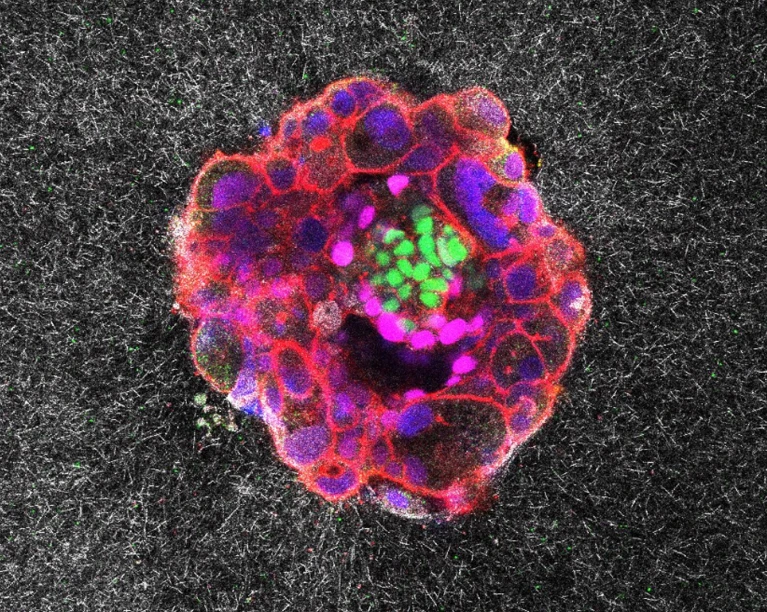
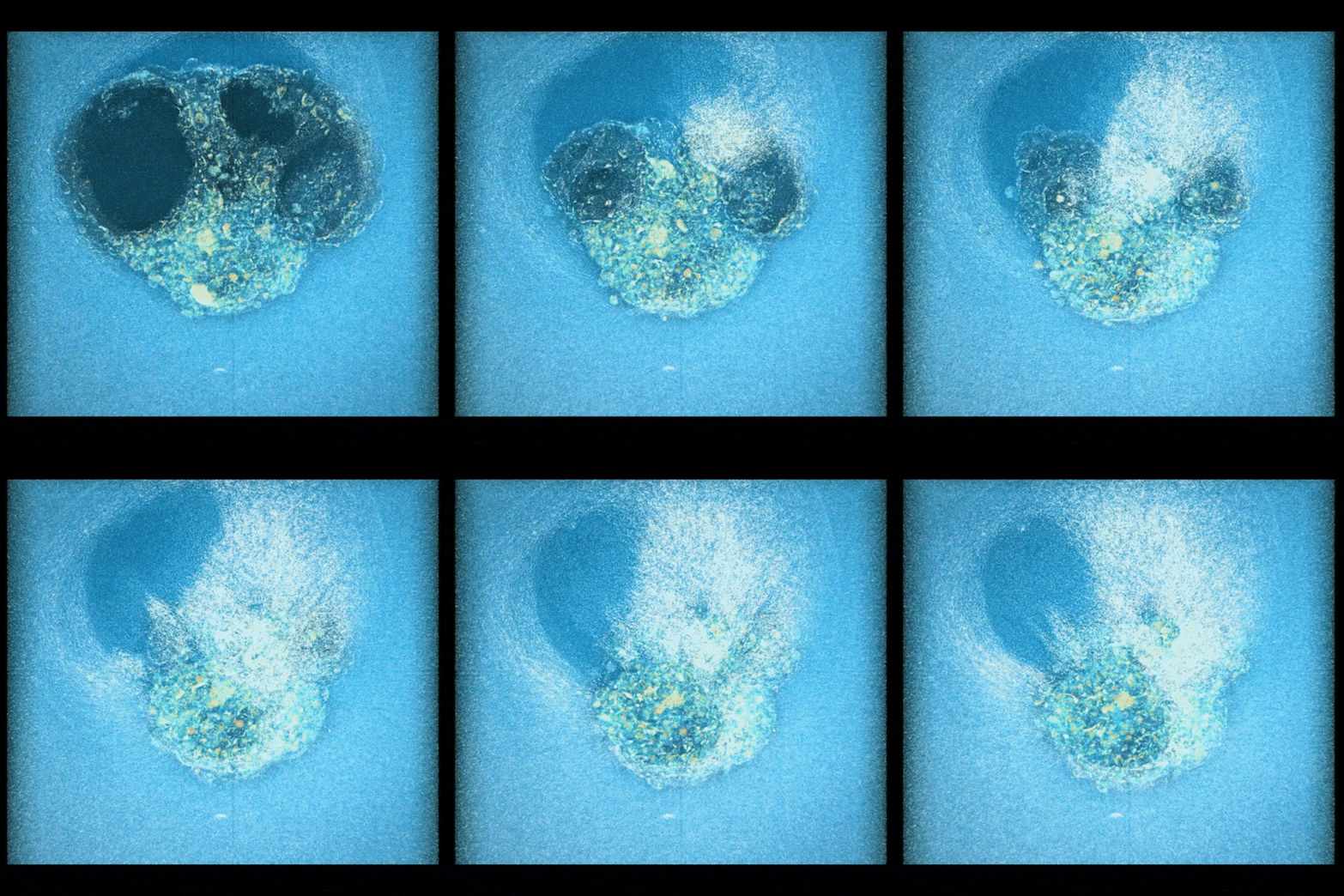
For the first time, scientists have filmed the moment a human embryo burrows into a lifelike uterine lining — and it’s far more forceful than previously imagined. The time-lapse footage reveals the embryo physically pulling and pushing the tissue apart to make room for itself.
This groundbreaking research, published in Science Advances, offers an unprecedented look at one of the most critical yet inaccessible events in early pregnancy.
Why Implantation Has Been Hard to Study
Embryo implantation happens deep inside the uterus, making it nearly impossible to observe in humans.
Co-author Samuel Ojosnegros, a bioengineer at the Institute for Bioengineering of Catalonia (IBEC), explains:
“It’s such an important process for human reproduction, but at the same time, we don’t have the technology to study it inside the body.”
Previous studies often used glass surfaces, but embryos can’t penetrate glass like they can real tissue. The IBEC team solved this by creating a synthetic uterine lining from collagen-rich gel containing proteins essential for embryo development.
How the Experiment Worked
- Researchers used human embryos donated by a local hospital.
- They placed the embryos near the gel-based mock uterine lining.
- Using a microscope, they took images every 20 minutes over 16–24 hours.
- The stills were stitched together to create a real-time video.
The result: a vivid time-lapse showing the embryo actively invading its new “home” rather than passively settling in.
What the Footage Shows
Biomechanics researcher Amélie Godeau was stunned by the embryo’s speed:
“My first reflex was to think my experiment had gone wrong and there was some drift in the microscope.”
Unlike mouse embryos, which attach on the surface, human embryos appear to remodel their surroundings, pulling tissue apart as they dig deeper.
Why It Matters
This insight could lead to better understanding of fertility, early pregnancy loss, and potential causes of implantation failure. It might also improve in-vitro fertilization (IVF) success rates by revealing the mechanical and biochemical requirements for implantation.
Reference
- Godeau, A. L. et al. Science Advances 11, eadr5199 (2025). DOI link